

The signing of a memorandum between the akim of the Abay region, Berik Uali, and the management of the Chinese company Inner Mongolia Wanjiang Invest marked a new stage in the region's economic development.
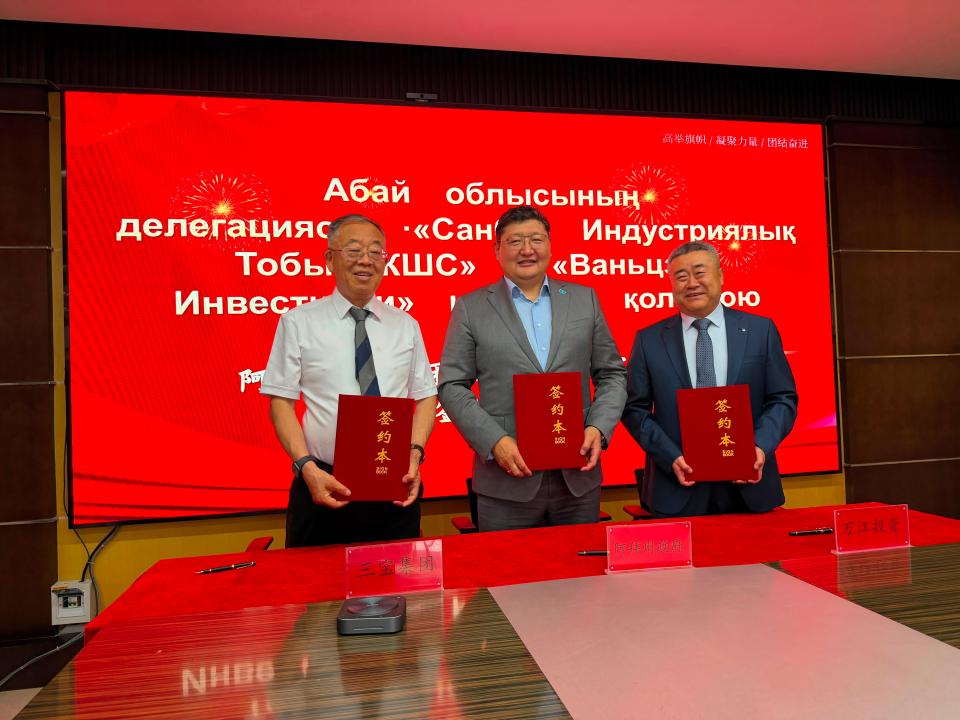
The ceremony took place in the Chinese city of Ordos, the administrative centre of one of the country's wealthiest regions. Cooperation with China, which has been gaining momentum in recent years, is now reaching the level of strategic partnership, with the potential to fundamentally transform the Abay region and open up new opportunities in industry, energy, and the social sphere.
Major investments are on the horizon: according to the signed memorandum, the projects in question have a total value of 1.5 billion US dollars. And this is only part of a broader effort to attract capital from the People's Republic of China. Overall, following various meetings and conferences, the portfolio of investment agreements between the Abay region and Chinese partners is set to reach billions of dollars. This reflects the systematic approach of the regional leadership to fostering a favourable investment climate and channelling capital into Kazakhstan's economy.
At the core of the signed memorandum are two key projects designed to become growth drivers across multiple sectors. The first is the construction of an aluminium products plant with an annual capacity of 300,000 tonnes. The implementation of this project, initiated by a major Chinese mining holding, will create at least 1,000 new jobs. The construction of the enterprise will cover the entire process from raw material extraction to the production of high‑value‑added finished goods, which will have a multiplier effect on the regional economy, stimulate the development of related industries, and boost tax revenues.
The second flagship project is the construction of a wind power plant with a total installed capacity of 1 GW. This project aligns with the global agenda for transitioning to green energy and strengthening the country's energy security. The use of renewable energy sources will contribute to reducing the region's carbon footprint and supplying its growing industrial facilities with clean, renewable electricity.
The akim of the region also visited a number of modern industrial enterprises in Ordos. During these visits, discussions covered industrial development, new energy, agricultural processing, the expansion of investment cooperation, the adoption of best practices, and the implementation of joint investment projects.
Ravil KASYMOV
Comments powered by CComment