
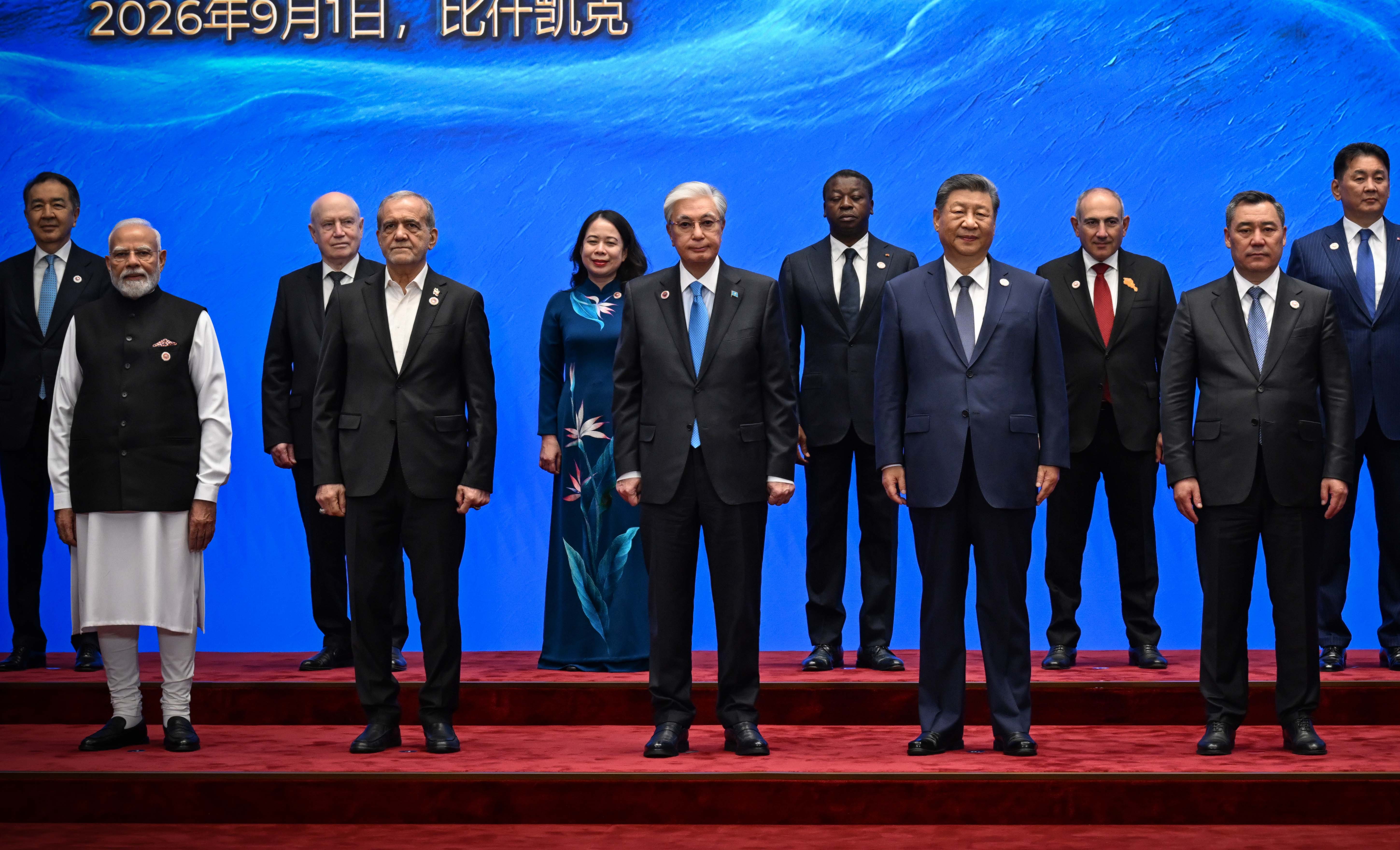
The President of the Republic of Kazakhstan took part in the meeting of the Council of Heads of State – members of the Shanghai Cooperation Organization, held in Kyrgyzstan. In his address, Kassym-Jomart Tokayev emphasized the importance of further strengthening interaction among SCO member states amid the evolving global landscape.
According to the Head of State, over the past quarter-century, the SCO has evolved from the "Shanghai Five" into one of the largest international organizations, uniting nearly half of humanity. In the context of growing geopolitical tensions, the principles of the "Shanghai Spirit" – mutual trust, respect for sovereignty, non-interference, and cooperation – are of particular significance.
– The SCO operates outside the logic of military-political blocs and is not directed against any state. It is built on a fundamentally different political philosophy – the "Shanghai Spirit," rooted in the ideas of joint effort in the name of progress. Our primary goal is to build a strong and prosperous SCO community, – he stated.
At the same time, the President highly commended Kyrgyzstan's chairmanship of the Shanghai Cooperation Organization and emphasized that the outcomes of the meeting should give new momentum to the Organization's development and strengthen its international standing.
It is worth noting that Kassym-Jomart Tokayev identified the strengthening of security cooperation as one of the key priorities, proposing to convene an SCO Ministerial Conference on Strategic Stability and Confidence-Building Measures in Eurasia. Possible topics include reducing military risks, preventing dangerous incidents, and curbing a new arms race.
Special attention was paid to countering terrorism, extremism, and separatism, which are increasingly intertwined with transnational crime, drug trafficking, illicit arms trafficking, and cyber threats.
– Combating the "three forces of evil" – terrorism, extremism, and separatism – remains a priority of our cooperation. These threats are becoming ever more closely linked with transnational crime, drug trafficking, illicit arms trafficking, and cyber threats. Kazakhstan supports the goals and objectives of the SCO Universal Center for Countering Security Challenges and Threats, as well as the SCO Anti-Drug Center. Their activities will elevate the coordination of our states' competent authorities to a qualitatively new level and enhance the effectiveness of joint efforts in this area, – the President noted.
In addition, the Head of State identified the expansion of trade, economic, and investment partnership as a strategic priority. According to him, mutual trade turnover among SCO countries is approaching $1 trillion, yet the existing potential is not being fully utilized.
Kazakhstan advocates for the creation of a broad trade and investment space with minimal barriers and digital procedures. In this regard, it was proposed to introduce a mechanism of pilot industrial consortia, which would allow countries to launch joint projects without waiting for all participants to be ready simultaneously.
Another initiative is the establishment of SCO cross-border trade zones based on existing border cooperation centers. These could serve as platforms for simplified goods exchange, digital procedures, and modern settlement mechanisms.
The Head of State also supported China's initiative to establish an SCO Development Bank. Its resources are expected to be directed primarily toward infrastructure, technology, and industrial projects. Should consensus be reached, Kazakhstan stands ready to host the headquarters of the new financial institution.
Special attention in the address was devoted to the development of transport links. Kazakhstan proposes accelerating the formation of a unified Eurasian logistics framework and strengthening the interconnection of key routes – the Belt and Road Initiative, the Trans-Caspian International Transport Route, the North–South corridor, and emerging directions between Central and South Asia.
Furthermore, the President proposed more active implementation of digital customs procedures, mutual recognition of electronic documents, and "green corridors." One promising initiative could be a Unified Digital Transit Platform of the SCO, which would ensure end-to-end cargo tracking from shipper to consignee.
Kazakhstan also called for the development of an SCO Transport Connectivity Strategy until 2035.
The President named technological development as another priority. In his view, the rapid spread of artificial intelligence and digital technologies requires SCO states not only to adapt but also to jointly create new solutions.
Our country proposes establishing a network of artificial intelligence centers under the auspices of the SCO, with the involvement of leading universities, research organizations, and technology companies from member states. The initiative is aimed at pooling scientific potential, developing competencies, and building an indigenous AI ecosystem.
Kassym-Jomart Tokayev noted that Kazakhstan this year became one of the founding members of the World Artificial Intelligence Organization, established on China's initiative.
In conclusion, the President called for further reform of the Shanghai Cooperation Organization and proposed entrusting this work to the foreign ministries of the participating states.
At the end of his address, the Head of State reaffirmed Kazakhstan's readiness to actively participate in strengthening multilateral partnership within the SCO. According to him, the pooling of efforts and mutual trust can elevate cooperation among states to a qualitatively new level.
Prepared by Arlan EMIR
Comments powered by CComment