

The XIII International Winter School on Journalism and Communication has commenced in Almaty. This year, the meeting is timed to coincide with World Radio Day, proclaimed by UNESCO, and is dedicated to a pressing topic: "Media Pluralism: The Science of Artificial Intelligence in Central Asia."
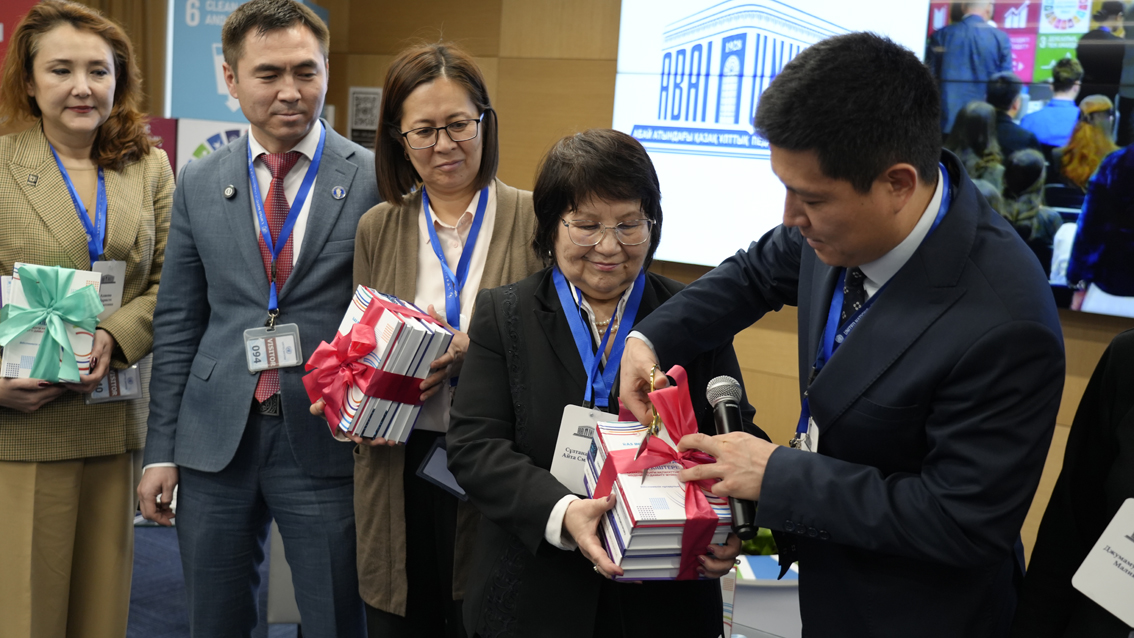
In his welcome speech, Tolen Zhenisbek, Head of the Center for Education and Social Development at the National Academy of Sciences under the President of the Republic of Kazakhstan, noted radio's role as an operative means of information. Emphasizing that the combination of modern science and media is the main driving force behind societal development, he drew attention to the growing importance of information security and scientifically grounded communication in the era of artificial intelligence.
International experts also shared their thoughts. Barbara Trionfi, Senior Advisor to the OSCE Representative on Freedom of the Media, participated online, highlighting the importance of preserving media pluralism and protecting freedom of speech during the period of digital transformation. She specifically pointed out the need to adhere to ethical norms when using AI tools.
Vlastimil Samek, Head of the UN Information Office in Kazakhstan, stated in his address: "Artificial intelligence not only opens new opportunities for journalism but also imposes a huge responsibility on the path to strengthening information credibility and peace."
Majer Masanov, a specialist from the UNESCO Regional Office, familiarized participants with the organization's latest resources in the field of media and information literacy, focusing on the importance of mastering digital radio technologies.
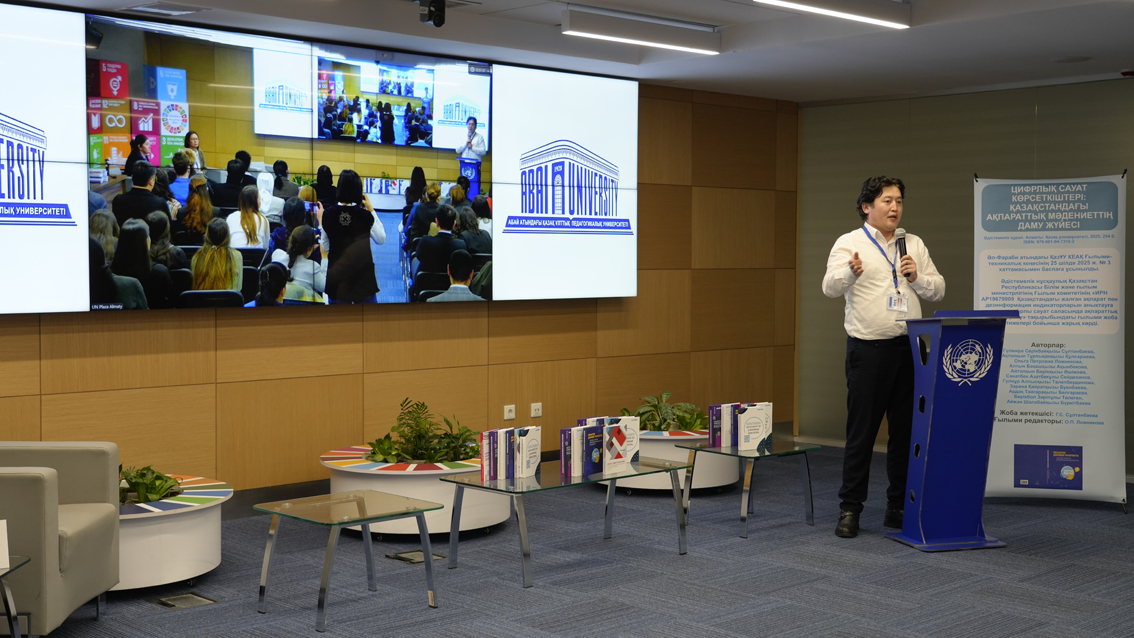
In turn, Sultan Yertai, Vice-Rector for Research and Innovation at Abai KazNPU, PhD, emphasized the strategic role of the event: "We live in an era of rapid digital transformation, where the need for professional integrity and responsible communication is higher than ever. Artificial intelligence is not a voice, but a tool." At the same time, he reminded that radio remains the most reliable means of communication, working even without internet and electricity, and saves lives in emergency situations. However, new technologies carry risks: disinformation, algorithmic influence, and copyright issues. According to him, media pluralism is not just a multitude of voices but the foundation of democratic resilience and public trust.
The central event of the first day was the speech by Bakhtiyar Tokhtakhunov, Editor-in-Chief of the national "Legal Gazette" and a researcher on the legal regulation of AI. His address served as a stark warning about where the capabilities of neural network algorithms end and where exclusive human responsibility begins. In his opinion, neural networks have moved from a "gray zone" into a clear legal field; AI is already actively used in courts, economics, politics, and medicine: it processes numerous documents, instantly analyzes thousands of court decisions, compiles timelines from open data, and even predicts case outcomes with a percentage probability: "Just five to ten years ago, we couldn't even imagine this, but now AI analyzes huge databases in seconds and predicts the outcome of a particular civil case as a percentage. This greatly relieves judges but carries hidden threats."
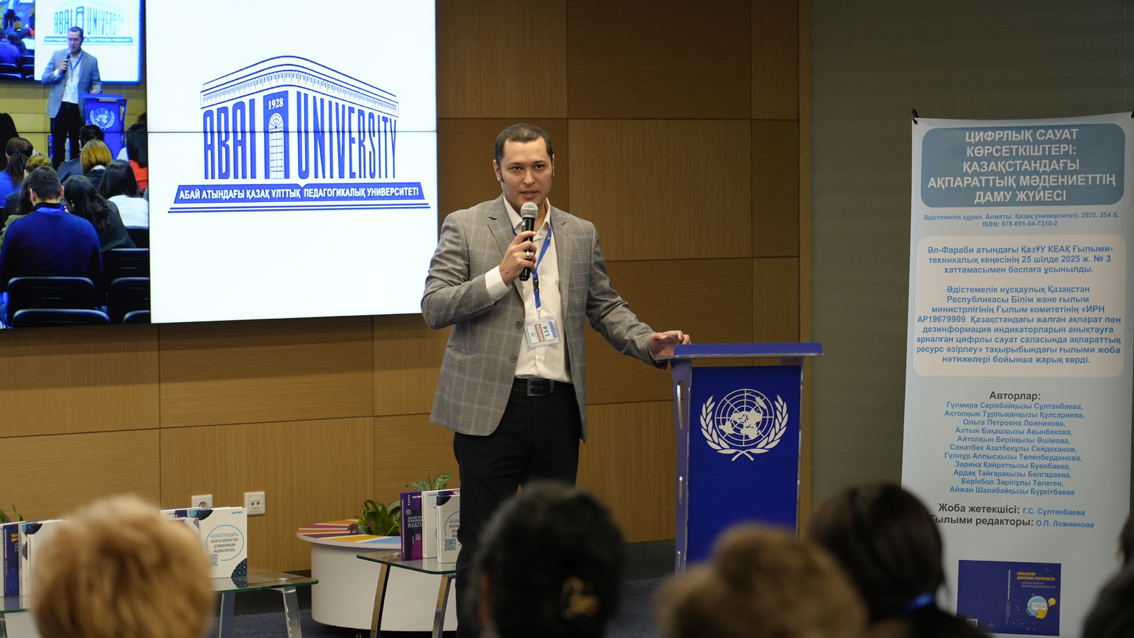
The editor sees the main danger in so-called neural network "hallucinations" – when an algorithm invents non-existent facts, and young correspondents often publish generated text without verification. For journalism, this is critical, as the result can lead to retractions, loss of reader trust, and lawsuits. B. Tokhtakhunov also shared a personal experiment from his doctoral dissertation work: "I trained AI to generate materials based on my articles from five years ago. After a couple of attempts, the algorithm began to perfectly copy my authorial style, inventing events. Colleagues, reading the artificially created text, praised 'me' for my skill. However, I quickly began to realize that we are gradually losing touch with reality when false information is presented in a flawless shell."
The speaker highlighted two fundamental limitations of artificial intelligence:
- Lie Detector.A machine cannot sense when a living person is lying or manipulating.
- Moral and Legal Responsibility.Only a person is responsible for an error – it is the journalist who can be held accountable before the law and the court, not the algorithm.
"A journalist must always doubt. Do not be lazy; be critical of yourself and of what the machine produces. Artificial intelligence is an auxiliary tool, but the hand on the pulse of events must always be human," summarized B. Tokhtakhunov, recommending that novice journalists actively use the Razinfo verification platform, maintain critical thinking, and strictly comply with the new Law on AI, which, since January 2026, clearly regulates responsibility for using neural network algorithms.
The training will last ten days (72 academic hours) in a hybrid format. The program includes master classes on fact-checking, podcast creation, working with Big Data, legal regulation of media, combating "algorithmic dictate," and countering destructive content. Participants will receive international certificates.
The school serves as a true "bridge between generations": experienced editors-in-chief of national publications will share knowledge with master's and doctoral students from Kazakhstan, Uzbekistan, Kyrgyzstan, and other countries. As part of the school, which runs until the end of February, young researchers from China, Central Asian countries, Afghanistan, Yemen, Bangladesh, and Ethiopia will learn new methods of promoting the UN Sustainable Development Goals through media. Such large-scale meetings aim to enhance the professional qualifications of future journalists and strengthen international cooperation.
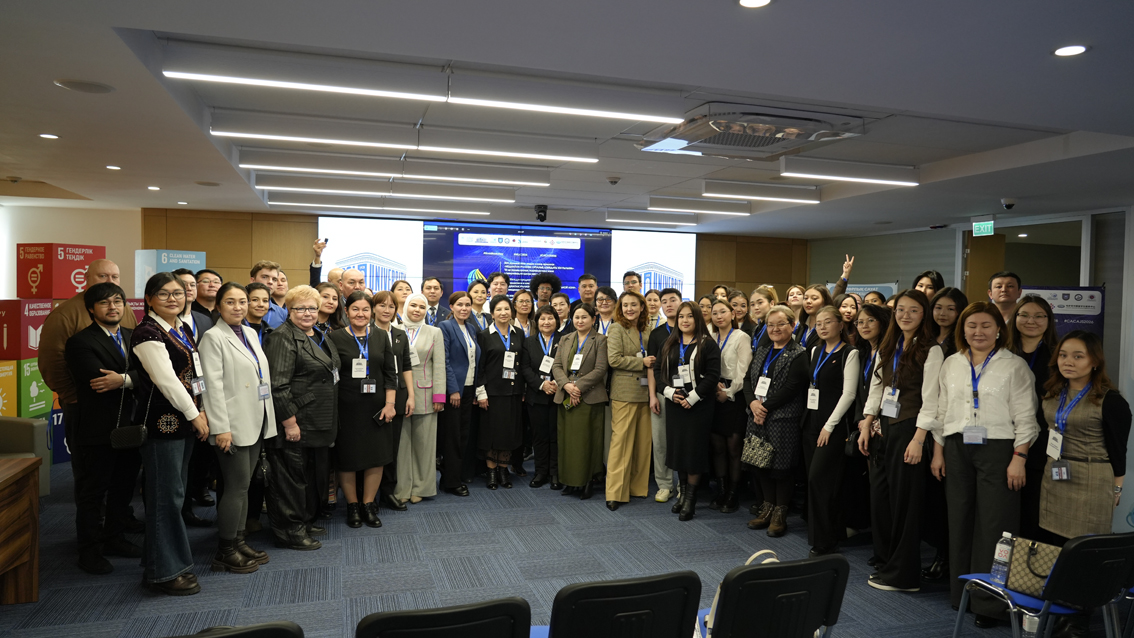
The organizers emphasize that the main goal is not just to teach how to work with neural networks, but to cultivate critically thinking specialists for whom technology remains merely a tool in the search for truth.
The XIII Winter School of Journalism in Almaty sends an important signal: in 2026, declared the Year of Digitalization and Artificial Intelligence, Kazakhstan intends to maintain human control over the future of media.
Prepared by Ravil KASYMOV
Comments powered by CComment