

Just twenty years ago, anyone determined to turn another person's life into an object of constant control had to go to considerable lengths. They would spend hours waiting outside apartment buildings, follow their target's commute to work, call mutual acquaintances in hopes of learning their victim's whereabouts. Every new piece of information was obtained with great difficulty, and physical stalking demanded time, patience, and a constant risk of being spotted.
Today, the situation has changed radically. A modern stalker may never appear near their victim's home. All they need is a smartphone, access to social media, and a few digital services. The "last seen" status, geolocation data, photos, stories, comments, friend lists, and even random check-ins on maps gradually piece together a detailed portrait of a person's daily life. Sometimes the victim themselves has no idea just how much information about themselves they leave behind in the digital space every single day.
The paradox of the 21st century is that technologies created for communication and convenience have simultaneously become powerful tools of psychological control. They allow the stalker to remain invisible, to observe their target virtually around the clock, and to intrude upon their life without ever leaving their own apartment.
It is important to understand that digital technologies have not changed the psychology of the stalker; their motives remain the same: the desire to control, to regain power over another person, to refuse to accept rejection, or to satisfy an obsessive fixation. What has changed are the means and the tools.
Another distinctive feature of digital stalking is its subtlety. Many of the stalker's actions are not perceived by others as unlawful. Browsing social media pages, creating a new account after being blocked, sending persistent messages, or attempting to determine a person's whereabouts may seem harmless when viewed in isolation. Taken together, however, they form a persistent system of psychological pressure that gradually robs the victim of their sense of safety.
For most people, a smartphone is a tool for communication, work, and entertainment. For a stalker, it is a source of information about another person's life. Moreover, a significant portion of this information is accessible without hacking devices or employing complex technical means.
Social media are the primary target of attention. Every posted photograph, every check-in at a café, every comment from friends, or every new subscription allows the stalker to piece together the victim's habits, routines, and social circle. Even if a person consciously limits the amount of information they publish, individual digital footprints gradually accumulate into a fairly detailed picture of their everyday life.
Location-tracking technologies pose a particular threat. Shared geolocation access, family tracking services, Bluetooth tags, device synchronization, and other digital features can be misused—not for ensuring the safety of loved ones, but for total surveillance. In such cases, the victim may not even suspect that their movements are being monitored by another person in near-real time.
Finally, fake accounts remain one of the most widespread tools of digital stalking. After being blocked, the stalker creates new profiles, monitors the victim's pages, attempts to re-establish contact, gains access to posts through mutual acquaintances, or gathers information about their personal life. This strategy allows them to bypass established restrictions and makes it significantly harder to put an end to the harassment.
At first glance, digital stalking may seem less dangerous than physical surveillance. The stalker is not lurking outside the victim's windows, appearing near their workplace, or following them down the street. However, research in criminal psychology and victimology suggests otherwise. Constant digital surveillance can inflict psychological consequences on the victim that are no less severe.
The key feature of digital stalking is that it strips the victim of any sense of a safe space. Whereas in the past the victim could close the door to their apartment and feel protected, today the stalking continues right alongside the smartphone that remains within arm's reach almost around the clock. Every new notification, friend request, or message from an unknown number is perceived as a potential threat.
Over time, a state of constant psychological hypervigilance takes hold. The person begins to wonder who is viewing their posts, how the stalker learns about their movements, and who might be passing on information. Even the most ordinary events start to feel like signs of surveillance, and the victim begins to feel that their personal life no longer belongs to them.
One of the greatest challenges is that many people realize far too late that they have become the target of systematic harassment. Individual actions may seem random or insignificant, but their repetition and persistence reveal a very different picture.
Red flags include situations in which a person consistently knows about your activities even though you never shared that information with them. Also concerning is the appearance of new accounts after previous ones were blocked, repeated attempts to re-establish contact despite your refusal, and an excessive interest in your whereabouts, social circle, and private life.
Equally alarming signs are demands for passwords, requests to keep geolocation sharing permanently enabled, or insisting that you account for every social media visit or missed call. Such behavior is often disguised as care, jealousy, or a desire to "sort things out" in a relationship, but in reality, it constitutes an attempt to establish total control.
Particular attention should be paid when the stalker begins to involve other people. Attempts to contact relatives, friends, or colleagues, to learn your whereabouts through them, or to spread private information indicate that the stalking has entered a more active phase.
It is crucial to remember that the danger lies not in a single episode but in a pattern of behavior. When a person consistently ignores your rejection, crosses personal boundaries, and uses digital technology for constant surveillance, this is no longer a sign of affection or an emotional reaction to a breakup—it is a potentially dangerous form of psychological abuse.
Therefore, modern stalking cannot be viewed solely as a matter of digital security. First and foremost, it is a matter of criminal psychology.
The sooner society learns to recognize digital stalking, the greater the chance of preventing it from escalating into open aggression. In the 21st century, a crime often does not begin with a stalker lurking at an entranceway, but with another notification appearing on a phone screen. And it is precisely at that moment that timely help-seeking can make the difference between preserving one's psychological well-being and, in some cases, even saving a life.
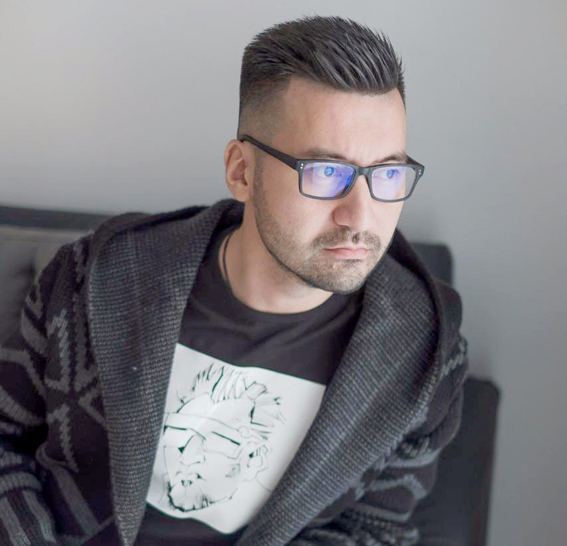
Kazbek AKHMETOV,
Psychologist, Doctoral Candidate
at Al-Farabi Kazakh National University
Comments powered by CComment