

From August 31 to September 20, 370 cadets who have enrolled at the Almaty Academy of the Ministry of Internal Affairs of the Republic of Kazakhstan named after M. Esbulatov are undergoing field training exercises.
For each of them, the recruit's basic training course is essentially their first encounter with their future profession in conditions as close as possible to those they will face during their service.
This initial stage is crucial for the cadets' development. They are assisted by staff from the Department of Military and Tactical-Specialized Training and the Department of Physical Training, who teach them the skills and knowledge required for future law enforcement officers and instill in them a fighting spirit.
The Deputy Chief (for Drill and Discipline) of the Almaty Academy of the MIA of the Republic of Kazakhstan named after Makan Esbulatov, Police Colonel Yelnar Zhakiyanov, explained that the field training camp is not just a place where cadets temporarily live. It is a separate training system. Here, they learn organization, discipline, teamwork, physical endurance, first aid, land navigation, and how to act in various situations.
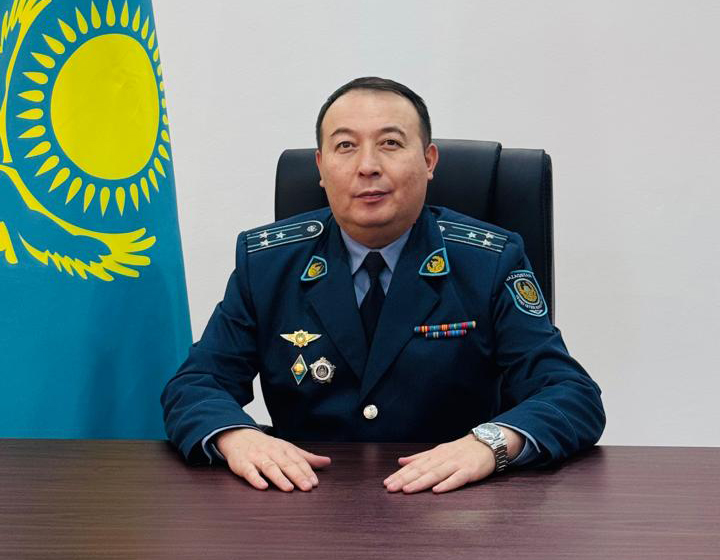
– The recruit training course includes theoretical instruction as the foundation of any military activity. During classes, they study regulations, internal rules, and discipline, which helps them understand responsibility and their duties. Special attention is paid to weapon handling rules and safety measures. This knowledge helps prevent accidents and ensures reliable protective skills and abilities.
Drill training, which includes practicing commands, proper posture, precision in military salutes, and the ability to march in formation, fosters team spirit, discipline, and respect for colleagues, laying the groundwork for future operational interaction within a unit.
– A critical component of the course is marksmanship training. Experienced instructors familiarize cadets with the design of weapons, teach them how to disassemble and assemble, clean, and observe safety measures when handling firearms. Live-fire exercises are conducted, which builds confidence and proficiency in using weapons in combat conditions, – noted Police Colonel Ye. Zhakiyanov, emphasizing that tactical training classes are devoted to terrain movement, squad-level actions, mastering the basics of camouflage, and selecting cover. These skills are essential for correctly assessing situations and responding quickly in potential conflict scenarios.
Another important aspect of the training is Radiological, Chemical, and Biological (RCB) protection. Here, cadets learn to put on gas masks and combined-arms protective kits, and to act on alert signals, which enhances their readiness to operate in extreme conditions.
In tactical medicine classes, the young recruits master skills such as applying tourniquets, stopping bleeding, evacuating the wounded, and basic resuscitation procedures. This knowledge is vital in various critical and extreme situations.
Of course, particular emphasis is placed on physical training, which develops endurance, the ability to withstand physical stress, and the capacity to perform complex combat missions. The field camp provides conditions for cross-country and strength exercises, obstacle course runs, and loaded marches in full gear. The camp has specific rules, and compliance with them is also part of the training – an important component is the ability to manage daily living tasks, maintain uniforms and footwear, and keep quarters in order. A sense of responsibility and organization is developed during guard duties and details.
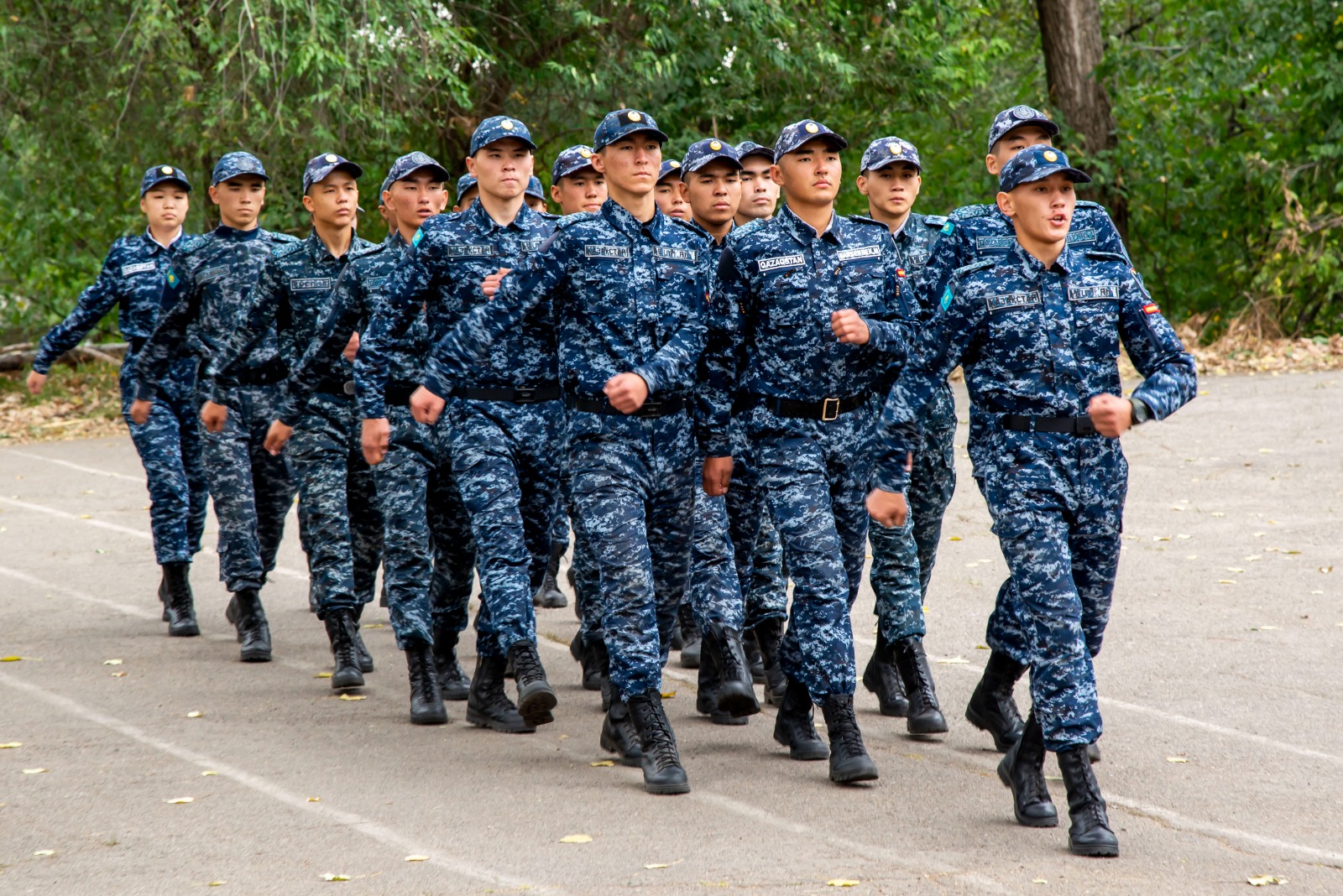
Thus, the professional path to serving as a police officer and combating crime requires intensive training and specialized knowledge. This is the foundation upon which a successful future career in law enforcement is built. Therefore, it is crucial to acquire the basic knowledge and skills needed for confident continuation of service from the very beginning.
The swearing-in ceremony holds particular significance for the cadets. This moment facilitates an internal transformation in each recruit. The solemn ceremony symbolizes for them their readiness to serve their homeland with honor.
Therefore, every day spent in the field during the recruit training course will be remembered by these young people not only as their first trials, intense exercises to accomplish assigned tasks, and rigorous preparation for service, but will also help develop essential personal qualities: responsibility, discipline, team spirit, stress resilience, and physical endurance. For a future police officer, this is no less important than the knowledge they will gain in the classroom, because police service is not only about knowing laws and regulations. It is the ability to make quick decisions, maintain composure, work in a team, and take responsibility not only for oneself. It is in field conditions that these skills feel closest to real operational tasks.
The young people who entered the academy this year are just beginning to get used to their new status, uniform, daily routine, and the requirements imposed on internal affairs officers. So the recruit training course is their first school and stepping stone toward the profession, allowing them to fully concentrate on the learning process, discipline, and teamwork.
For many of today's cadets, these exercises will remain as their first memory of the academy, which later becomes part of their professional journey. Soon they will be mastering specialized disciplines, gaining the knowledge and skills of their future specialty.
This period is special not only for the cadets but also for their parents, who can rest assured that their children are under the constant supervision of instructors and mentors responsible for their safety and training, as well as for creating all the necessary conditions for accommodation, nutrition, education, and medical support. After all, the main thing here is that they are taught not only to follow the routine but also to adapt, learn to live in a collective, consider the interests of others, take responsibility for their assigned duties, and not let their comrades down. Such seemingly simple things ultimately become professional skills.
The organization of the educational process and the management of daily living matters are under the supervision of the academy's leadership. The Head of the Almaty Academy of the MIA, Police Colonel Kalizhan Koblandin, interacts with the cadets and training leaders, and participates in roll-call formations. Such attention and care mean a great deal to the recent school graduates.
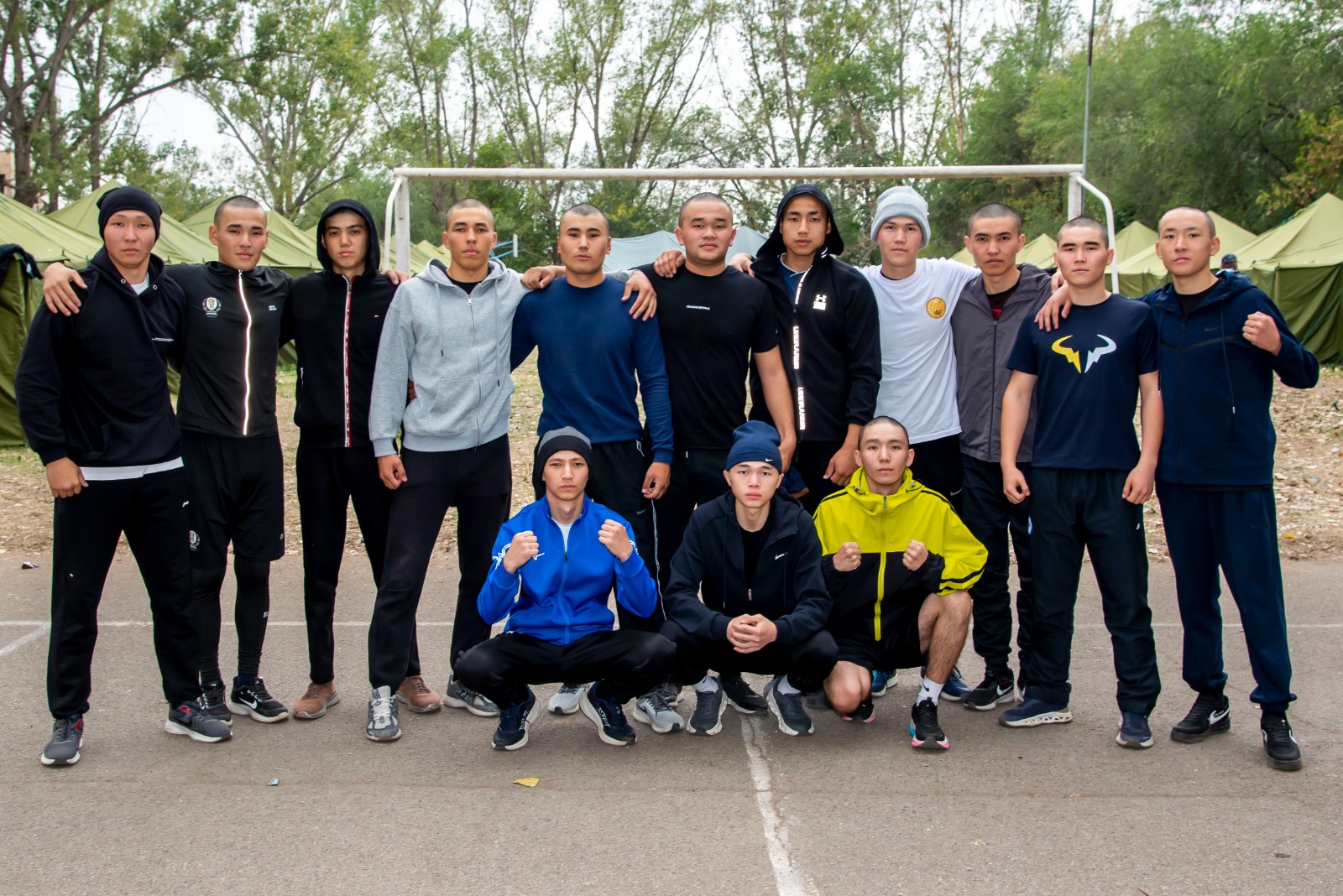
Summing up the organization of the field training, Ye.S. Zhakiyanov emphasized that until September 20, the current first-year cadets will have new classes, standards, tasks, and challenges. But they are already successfully passing their first milestone. And judging by the cadets' morale, they have settled in, become more confident, and are beginning to understand the main thing: the uniform they put on this year is not just standard clothing. It is the beginning of a profession for which one must be prepared under any conditions.
It should also be noted that this year, the Almaty Academy of the MIA has enrolled more cadets than usual, indicating a growing interest among young people in serving in the police.
Prepared by Ravil KASYMOV
Comments powered by CComment