

The vector of Kazakhstan's historical development has invariably rested on its fundamental state-legal milestones, one of which is October 25, 1990 – the day the Supreme Soviet of the Kazakh SSR adopted the Declaration "On the State Sovereignty of the Kazakh SSR." There is no doubt that it is precisely from this political-legal act, which marked a new milestone in the development of Kazakh statehood, that the constitutional history of sovereign Kazakhstan properly begins.
In accordance with the constitutional reforms of recent years and the amendments introduced into the Law of the Republic "On Holidays in the Republic of Kazakhstan," October 25 was restored to its true, highest status – the status of the Main National Holiday. In this regard, the Head of State, Kassym-Jomart Tokayev, noted the need to restore to the day of adoption by the Supreme Soviet of the republic of the Declaration "On the State Sovereignty of the Kazakh SSR" – as a symbol of the country's first step toward attaining genuine statehood, which opened the path to our sacred Independence – the status of a national holiday, the Day of the Republic, the country's main holiday.
By proclaiming October 25 as the country's main holiday, the state clearly affirms: modern Kazakhstan remains faithful to those fundamental legal origins, the principles of sovereignty, legality, and law and order laid down by the Declaration on State Sovereignty. This is not merely a tribute of sincere respect for a historical date, but a celebration of the triumph of the sovereign statehood of the Republic of Kazakhstan.
In domestic legal doctrine and legislative practice, the distinction between the concepts of "national holiday" and "state holiday" is of a deeply conceptual nature. "National holidays," according to the norms of Article 1 of the Law of December 13, 2001 "On Holidays in the Republic of Kazakhstan," are "holidays established in the Republic of Kazakhstan in commemoration of events of special historical significance that have had a substantial impact on the development of Kazakh statehood. ...State holidays are holidays dedicated to events of socio-political significance, as well as those traditionally celebrated by citizens of the Republic of Kazakhstan."
Accordingly, the day of adoption by the Supreme Soviet of the republic of the Declaration "On the State Sovereignty of the Kazakh SSR," as an event of special historical significance that had a fundamental impact on the development of Kazakh statehood, symbolizes the very foundational principle of the existence of the sovereign republic. The restoration of this supreme state status to the Day of the Republic emphasizes the inviolability of Kazakhstan's Sovereignty and Independence, restoring historical justice.
The Declaration, adopted by the Supreme Soviet of the republic in a solemn setting, being an act of special historical significance and symbolizing the revival of the centuries-old statehood of Alash, laid the foundation for the fundamentally important task of creating a new constitutional order in Kazakhstan, establishing the main parameters of an Independent state on its native Kazakh land. In this regard, the state sovereignty of Kazakhstan, as the highest legal reality, at whose origins stood the will of the people clothed in strict normative form, did not arise instantaneously in the form of ready-made state institutions, but crystallized through complex centuries-long state-legal processes.
The fundamental principles of Kazakhstan's statehood, as defined by the Declaration on State Sovereignty, were the unitary form of the republic's political structure, the integrity, indivisibility, and inviolability of its territory, the revival and development of culture, traditions, language, and the strengthening of the distinct identity of the Kazakh people. Undoubtedly, this historical document, which had a fundamental influence on the development of domestic statehood, is an act of constitutional significance that laid the legal foundation for the drafting of a new Constitution and legislation of sovereign Kazakhstan.
Academician Salyk Zimanov called the Declaration "On the State Sovereignty of the Kazakh SSR" a document of exceptional importance, which had special significance and priority among other legislative acts of the republic.
The Declaration on the State Sovereignty of the Kazakh SSR "was not merely a 'Declaration of Intentions,'" Academician G. Sapargaliyev rightly noted, "but had a normative legal character."
As is well known, in 1990 Kazakhstan, like all other union republics within the Soviet Federation, according to the Constitution of the USSR, was a sovereign socialist state. But the constitutional formula in practice concealed the true essence of the unitary Soviet state, which, relying on total centralization, controlled absolutely all spheres of life of the union republics. There was no talk of real sovereignty for Kazakhstan as an Independent state, since the imperial center had jurisdiction not only over fundamental issues of politics and economics, but also over the use of Kazakhstan's natural resources and even the organization and activities of local authorities.
The late 1980s entered world history as a period of deep systemic crisis of the Soviet federal state, associated with the decentralization of all-union state governance, economic collapse, and the aggravation of internal contradictions in conditions of legal vacuum and political chaos, which led to the phenomenon of the "parade of sovereignties" of the union republics, which adopted laws on state sovereignty one after another.
However, for Kazakhstan this process had its own unique, far more complex specificity, since its resources and powerful industrial potential were in fact managed by union ministries, leaving the republic only a small share of the national income. In conditions of political instability of the union center, risks of destructive situations arose around the republic's borders, which also faced the phenomenon of the "war of laws," when normative acts of all-union bodies paralyzed republican law-making, ignoring its national, economic, and cultural specifics.
The exponent of this objective necessity and the will of the people toward Sovereignty and Independence was the Supreme Soviet of the Kazakh SSR of the 12th convocation – a Parliament unique in its intellectual and professional composition, within whose walls unprecedented in scale work unfolded on drafting the Declaration on State Sovereignty, conducted in conditions of sharp clash of polar opinions, legal concepts, and political views of the deputies.
In the process of working on the draft Declaration, many letters, collective appeals, and telegrams were received, which were studied in detail by members of the Supreme Soviet commission specially formed to prepare a new version of this fateful document. And as the results of the discussion of the historical document showed, it was precisely the nationwide support for the idea of genuine sovereignty of Kazakhstan that enabled the Supreme Soviet to adopt the Declaration on State Sovereignty.
The results of the work of the Supreme Soviet commission on summarizing proposals and finalizing the draft Declaration on State Sovereignty, with the draft Declaration on the State Sovereignty of the Kazakh SSR approved by the majority of commission members, were reported by Academician S. Zimanov on October 25, 1990, at a session of the Supreme Soviet. And after its six-hour article-by-article discussion, the Declaration on State Sovereignty was adopted by the Supreme Soviet.
The adoption by the Supreme Soviet of the Declaration as an act of constitutional significance caused an extraordinary spiritual uplift and enthusiastic responses from various segments of Kazakh society. "The Declaration on Sovereignty is a victory of courage and diplomacy, reason and patience," the Head of State, K.-J. Tokayev, noted in this regard. "Very soon we felt the power of this historical document. We renewed the foundations of society and strove toward new heights. Having survived a difficult transitional period, Kazakhstan embarked on the path of building a strong statehood."
The Declaration on State Sovereignty laid the foundations of Independent Kazakh statehood, becoming the first act in domestic history to provide a holistic definition of the status of the Kazakh SSR as an independent, sovereign state. The Declaration enshrined all the attributes of real sovereignty of Kazakhstan: its own territory and citizenship; independence and fullness of power within the republic; supremacy of the Constitution and legislation; state budget; its own law enforcement structures; independence of the republic in international relations; as well as the classical symbols of state sovereignty: the Emblem, Flag, and Anthem.
According to the Declaration, the sole bearer of sovereignty and the source of state power in the republic was recognized as the people of Kazakhstan, exercising power both directly and through representative bodies, which emphasized the genuinely democratic character of the state power being formed on new principles.
The Declaration on State Sovereignty also enshrined provisions on the supremacy, independence, and fullness of state power within Kazakhstan and in external relations, which allowed the republic to pursue an independent domestic and foreign policy in the future. The territory of the republic was declared indivisible and inviolable within its existing borders and could not be used without its consent. Any actions aimed at forcibly changing or violating the integrity of the territory were declared unlawful. From a legal standpoint, this was Kazakhstan's first clear international-legal claim to recognition of its political and territorial contours as sovereign and protected by the force of law.
On the territory of the republic, with the exception of issues voluntarily delegated by it to the Union, the supremacy of the Constitution and laws of the Kazakh SSR was established, which were subject to observance and implementation by all state bodies, enterprises, institutions, and organizations, as well as citizens. This step made it possible to overcome the destructive legal dualism of all-union and republican legislation and the so-called "war of laws." The republic proclaimed its right to suspend the operation of acts of union bodies if they violated its Constitution and laws, thereby laying the cornerstone of Kazakhstan's state sovereignty.
At the same time, Kazakhstan's sovereignty and the inviolability of its territory were ensured by political, legal, and economic guarantees. Thus, Article 3 of the Declaration established that any violent actions against the constitutional order of the republic and public calls for violating the integrity of its territory are prosecuted by law. The Declaration also established that the Kazakh SSR independently resolves issues related to political, economic, social, and national-cultural construction in the republic, its administrative-territorial structure, determines the structure and competence of state power and governance bodies, as well as the symbols of the state.
It is also important to note that the Declaration became the first legal act in Kazakhstan's history to enshrine the principle of separation of powers. Article 7 of the Declaration proclaimed: "State power in the republic is exercised on the principle of its separation into legislative, executive, and judicial." Legislative power was assigned by its norms to the Supreme Soviet; the President was declared the head of the republic, possessing supreme administrative-executive power. Supreme judicial power was granted to the Supreme Court of the republic. The implementation of the principle of separation of powers made it possible to begin the phased dismantling of the totalitarian system of state governance, establishing the first contours of a future parliamentary-presidential republic, the creation of a professional Parliament, a strong executive vertical of power, and independent justice.
The idea of guaranteeing and protecting the rights and freedoms of the individual ran as a red thread through all the provisions of the Declaration on State Sovereignty. The Declaration laid the foundations for the full provision of human rights and freedoms and the affirmation of the human being as a free individual. Citizens residing on the territory of Kazakhstan were guaranteed all constitutional rights and freedoms, regardless of their national and party affiliation, origin, social and property status, gender, religion, occupation, and place of residence. Equal legal opportunities to participate in state and public life were also guaranteed to public, political, and religious organizations and mass movements operating within the framework of the republic's Constitution.
Representatives of nations and nationalities residing in Kazakhstan were guaranteed all constitutional rights and freedoms, as well as legal equality and equal opportunities in all spheres of public life. At the same time, for the first time at such a high level, the state's obligation to show concern for satisfying the national-cultural, spiritual, and linguistic needs of Kazakhs living outside Kazakhstan was also clothed in normative form.
Real sovereignty is inconceivable without real economic independence of the state, if it were not based on the republic's full power in the economic sphere. In this regard, the Declaration established that land and its subsoil, waters, other natural resources, cultural and historical values of the people, the entire economic, scientific-technical potential – all national wealth available on the territory of Kazakhstan – are in the exclusive ownership of the republic, constituting the basis of its sovereignty. This historical provision was reinforced by the Declaration's norm on ensuring diversity and equality of forms of ownership in the Kazakh SSR and guaranteeing their protection.
The Declaration's norms that the republic has the right to establish a state national bank, its own financial-credit system, independently form the state budget, and organize tax and union-republican customs systems were also of constitutional significance for ensuring the sovereignty of the Kazakh SSR. In this regard, the Declaration also proclaimed the right of the Kazakh SSR to its share in all-union property in accordance with its contribution, including in the diamond, currency funds, and gold reserves.
In connection with the active functioning on the territory of Kazakhstan of nuclear and other military test sites of the USSR, which caused enormous damage to the health of its population, the norms of Article 11 of the Declaration were also of historical significance, stating that the testing of nuclear weapons and the construction and operation of test sites for other types of weapons of mass destruction are prohibited on the territory of the republic. In this regard, the Declaration proclaimed: "The Kazakh SSR has the right to compensation for damage caused to the health of the population, the natural environment, and the economy of the Republic by the actions of union bodies, union republics, and other states, as well as by the activities on its territory of nuclear and other test sites and military-industrial complex facilities."
The Declaration on State Sovereignty also for the first time enshrined the constitutional-legal status of Kazakhstan as a full-fledged subject of international law. After all, a state that does not possess full international legal personality cannot be considered sovereign. In this regard, the Declaration established that the Kazakh SSR has the right to act as an independent subject of international relations, determine foreign policy in its own interests, participate in the activities of international organizations, and independently resolve issues of foreign economic activity on the basis of mutually beneficial treaties with foreign states. Any interference in the resolution of issues constituting the inalienable right of sovereign Kazakhstan was regarded as a violation of its sovereignty. In this regard, the symbols of its state sovereignty – the Emblem, Flag, and Anthem – were proclaimed sacred, and any desecration of them entailed punishment in accordance with the law.
Thus, the Declaration on State Sovereignty fixed historically fundamental provisions that determined the fate and status of our republic, its place in the renewed USSR and in the international community. As is well known, the adoption of the Declaration on the State Sovereignty of the Kazakh SSR, along with similar acts of other republics that then constituted the Soviet Federation, opened the way to restructuring the relations that had developed within the framework of the USSR and to drafting a new Union Treaty. Moreover, the Supreme Soviet of the Kazakh SSR generally pursued a highly correct political and legal line, remaining within the constitutional field of the USSR. Not a single law of Kazakhstan adopted during that difficult time, in the conditions of the "parade of sovereignties" of the republics, contradicted the Constitution and laws of the USSR.
The historical significance of the Declaration on State Sovereignty, as a directly operative act that became the political-legal basis for the democratic development of Kazakhstan, lies in the fact that it became the basis for drafting the country's new Constitution and other legislative acts that fully realized the status of the Republic of Kazakhstan as a sovereign state. Thus, the Declaration carried out the primary legitimization of the republic's sovereign rights, preparing solid legal ground for the subsequent legal formalization on the political map of the world of a new Independent state – the Republic of Kazakhstan.
The years that have passed since the adoption of the Declaration on the State Sovereignty of the republic have become a time of comprehensive strengthening of domestic statehood, its acquisition of the unconditional attributes of a modern democratic state, and the recognition and support of the Republic of Kazakhstan by the absolute majority of states of the world as a full-fledged and authoritative member of the world community. With the subsequent adoption by the Supreme Soviet of our country of the Constitutional Law of December 16, 1991 "On the State Independence of the Republic of Kazakhstan," the Constitutions of the Republic of Kazakhstan of 1993 and 1995, and the currently operative Fundamental Law adopted at the republican referendum on March 15, 2026, the constitutional formalization of the establishment of Kazakhstan as a genuinely Independent state was finally completed.
The principles laid down by the Declaration on State Sovereignty became a value and normative guideline for subsequent stages of development of the state's Fundamental Law, reflecting the new challenges that Kazakhstan faced on the path of strengthening its legal identity, step by step developing the basic legal postulates laid down in the Declaration. Thus, the entire constitutional path of Kazakhstan represents a consistent unfolding and deepening of the legal potential laid down at the origins of our statehood.
At the present stage of historical development, the ideals of sovereignty laid down on October 25, 1990, have received their new normative and value content in the Constitution of the Republic of Kazakhstan of 2026, which marked a fundamental modernization of the entire political-legal architecture of the state for building a Just Kazakhstan – a state where the rule of law and the protection of the rights and freedoms of citizens are an absolute priority. A key marker of this constitutional modernization was the transition from a super-presidential model of governance to a presidential republic with a strong President, an influential Parliament, and an accountable Government, which made it possible in practice to implement the classical doctrine of checks and balances, the first contours of which were outlined in the Declaration on State Sovereignty.
The constitutional novelties of the Fundamental Law substantially expand the participation of citizens in state governance and strengthen the human rights potential of the entire state mechanism, radically changing the domestic legal landscape, within the framework of which the restoration of the Day of the Republic to the status of the Main National Holiday appears to be a deeply symbolic and legally well-founded step.
In this continuous process of strengthening the Sovereignty of the Republic of Kazakhstan, an exceptional role belongs to the domestic legal community, since judges, prosecutors, lawyers, notaries, legal counsel, and legal scholars are the direct architects and custodians of the legal fabric of the state. It is on their professionalism, integrity, and fidelity to the constitutional principle of Law and Order that the effectiveness with which the norms of the Constitution are transformed into real protection of the rights of every Kazakhstani citizen depends.
Thus, the Declaration on State Sovereignty adopted by the Supreme Soviet of the republic on October 25, 1990, has stood the test of time, proving its impeccable practical viability and fulfilling its main historical mission – translating the centuries-old aspirations of the Kazakh people for state Independence into the strict language of operative law recognized by the world community. In this regard, the norms of the Constitution aimed at entrenching the principles of justice, equality, and the rule of law clearly demonstrate that the legal potential laid down at the origins of our statehood continues to unfold and serve the good of society, reminding us that state sovereignty is a dynamic political-legal value requiring our daily labor to ensure legality, law and order, and justice. Fidelity to the ideals of the Declaration on State Sovereignty is the main guarantee of a stable, lawful, and prosperous Strong and Just Kazakhstan.
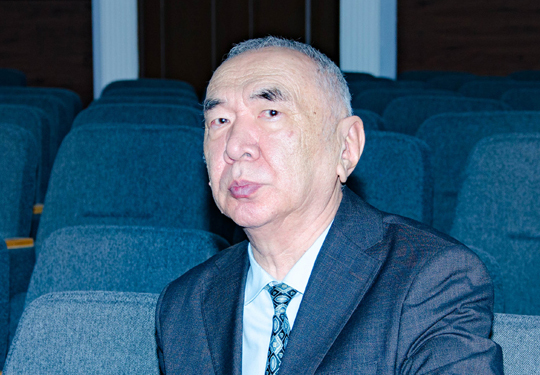
Kabdulsamikh AITKHOZHIN,
Doctor of Law, Professor at Kunaev University
Comments powered by CComment