

On January 1, 2026, Kazakhstan entered a new era of tax regulation. The adoption of the new Tax Code was not merely a change in the technical norms of fiscal policy but has also raised many ambiguous questions regarding the relationship between the state and business. Discussions on this topic are ongoing both among business entities and within the legal community.
How smoothly this transition proceeds depends not only on the quality of the document itself but also on how law enforcement practices develop. A key event in this process was a meeting titled "The New Tax Code: Key Changes and Approaches to Application," held last week at the Almaty City Court. Representatives from the judiciary, fiscal authorities, and the Bar Association gathered to discuss how to make justice in the tax sphere not only fair but also predictable.
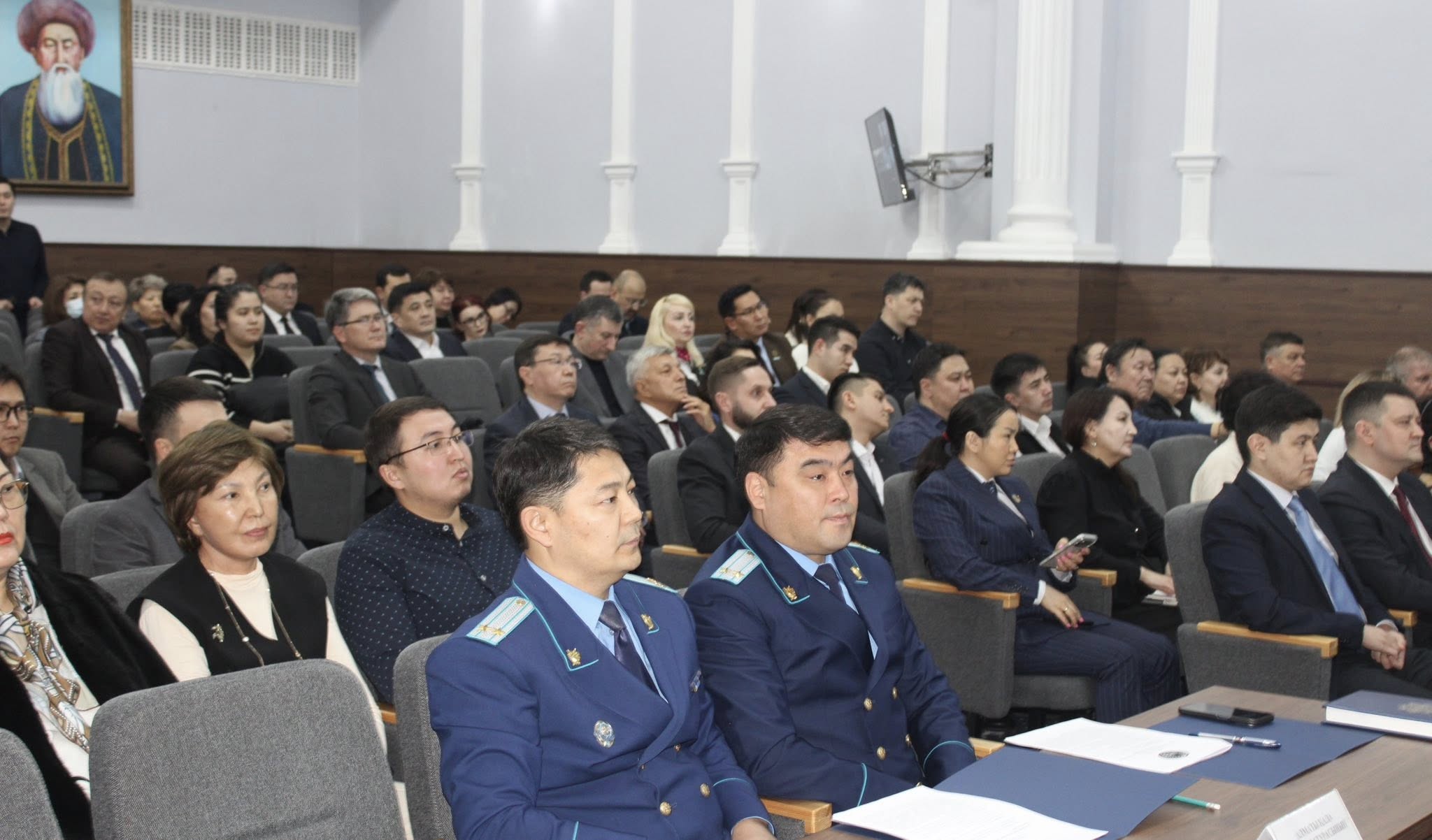
Opening the event, the Acting Chairman of the Almaty City Court, N. Beknazarov, set a businesslike and pragmatic tone for the discussion, emphasizing that the focus is not so much on the text of the Code itself, but on the principle of its uniform application.
This is understandable, because in conditions where any legal norm is tested in court, the judiciary becomes the main arbitrator, called upon to protect both the fiscal interests of the state and the property rights of taxpayers. Without this balance, it is impossible to ensure either budget revenues or the country's investment attractiveness.
The substantive part of the discussion was opened by the Director of the Methodology Department of the State Revenue Committee, O. Abdrakhmanov. His report, devoted to an overview of the key changes, became a kind of "road map" for the participants. The SRC representative detailed the legislative innovations in an analytical review, shifting from a simple listing of amendments to an in-depth analysis useful for law enforcement practice. The speaker showed that methodology specialists are ready to clarify the complex provisions and norms of the Code, although, of course, everything will be learned through practice.
Expanding on this theme, a well-known lawyer specializing in tax law, Zh. Suleimanov, focused on the procedural aspects of tax disputes. While the result (additional tax collection) is important for fiscal authorities, for the legal profession and business, the process (compliance with procedures and rights) matters. Particularly valuable was his pointing out new approaches to evidence that fundamentally change defense tactics. In the context of the updated code, simply having documents is insufficient; it is necessary to build a convincing legal position, considering not only the presumption of good faith but also strict measures against tax evasion.
This idea was further developed by the Managing Partner of "KP Disputes" LLP, R. Kassilgov. In his presentation, he translated theoretical changes into the realm of real judicial practice. In his opinion, the new Tax Code dictates that businesses need to reconsider their defense strategy: now, the winner is not the one who loudly declares violations, but the one who can present the court with a coherent system of evidence confirming the market nature of transactions and the existence of a business purpose.
One of the most important and telling speeches was given by the judge of the Specialized Interdistrict Administrative Court of Almaty, T. Amangeldiev. He reminded participants of a fundamental point sometimes forgotten amidst the fervor of additional tax assessments: tax relations are part of administrative procedures. The judge emphasized that the adoption of the new Tax Code in no way cancels the effect, role, and significance of the Administrative Procedural Code (APC).
The speaker cited several problematic aspects from practice. For instance, issues related to compliance with the hearing procedure and adhering to the scope of issues for which an unscheduled thematic audit is ordered remain relevant. The most common mistakes made by tax authorities during audits also include non-compliance with Article 72 of the APC (failure to investigate all circumstances of the case, conclusions unsupported by documents, lack of legal justification), as well as violations of the procedures for organizing audits and their deadlines. Issues regarding compliance with the procedures for starting and completing audits, delivering audit orders, notifying about suspension/resumption of audits, delivering preliminary reports with time allowed for submitting written objections, and delivering final audit reports also remain pertinent.
Attention was also drawn to the fact that courts are now obliged to review decisions of tax authorities not only for compliance with the special (tax) law but also for adherence to the general principles of administrative procedures: impartiality, completeness of investigation of circumstances, proportionality, and the right to be heard. Violation of these principles is a direct ground for annulment of an administrative act, even if the taxes were formally assessed correctly. This significantly raises the quality standards for the work of the auditing bodies themselves and will ensure a balance between the letter of the law and the rights of businesses.
Participants exchanged views on controversial aspects that are important for forming a unified judicial practice across the metropolis. At a time when the new Code is just beginning its life, such meetings help avoid discrepancies in the interpretation of norms and reduce the number of judicial errors. Essentially, the past event demonstrated that Kazakhstani justice in the tax sphere is moving from a simple fiscal function towards a more complex role, acting as an effective mediator and guarantor of fairness, where the state has the right to collect taxes, and businesses have the right to protection from non-procedural pressure. And it is in this that true legal certainty is born.
Summing up the meeting, N. Beknazarov returned to the key thesis: effective application of the law is impossible without constructive dialogue between the courts, the prosecutor's office, tax authorities, and businesses. The round table in Almaty served as a platform where contentious issues were not smoothed over, but discussed openly.
By Akmaral ABDULOVA
Comments powered by CComment