

Recently, there has been much discussion in Kazakhstan surrounding the draft Law of the Republic of Kazakhstan "On Amendments and Additions to Certain Legislative Acts of the Republic of Kazakhstan on Issues of Further Improvement of Criminal Legislation" (concerning the introduction of a jury trial for cases involving parole and commutation of sentence).
One must agree that the institution of parole in the Republic of Kazakhstan is at a stage of significant transformation. While the judicial system strives for humanization, initiatives arise that, despite their outward "democratic" appearance, may undermine the very essence of justice. One such controversial idea is the introduction of a jury trial to consider applications for parole.
Having examined the proposed legislative initiative to introduce trial by jury when considering applications for parole (early release on parole) and the commutation of the unserved part of a sentence to a milder punishment, we express deep concern regarding the conceptual lack of foundation and the practical risks of the proposed model.
In the theory of procedural law, the division of competencies between jurors ("judges of fact") and a professional judge ("judge of law") is an inviolable standard. An attempt to blur this line in parole cases leads to legal chaos.
Firstly, the application of the jury trial institution to parole matters does not align with the legal nature of the jury.
In both world and national practice, the jury is a "court of fact," authorized to resolve the question of a person's guilt or innocence. Petitions for parole and commutation, on the contrary, require exclusively legal and criminological assessment of the execution of the sentence. According to Articles 72-73 of the Criminal Code of the Republic of Kazakhstan, the court must determine: whether the goals of punishment have been achieved and whether the person's reformation has been proven. Entrusting these questions to a non-professional panel contradicts the nature of the jury and substitutes legal analysis with emotional judgment.
The competence of jurors lies in the past. That is, jurors establish the event (did it happen or not?), the time, place, method of the act, and the causal link, analyzing data that can be confirmed by witness testimony, expert reports, and evidence. When rendering a verdict, jurors use their "life experience" to discern whether a witness is lying or telling the truth.
However, the question of parole is not about the past (which is already fixed by the sentence), but about the present and the future. It should be noted that reformation is not a fact, but an evaluative legal category. It is a complex synthesis of the convicted person's behavior, their attitude towards work, the degree of remorse, and compensation for damages.
Moreover, assessing reformation requires analyzing the dynamics of the individual's personality over years of incarceration. Jurors, seeing the convicted person only once in the courtroom, are physically incapable of assessing this process in its dynamics.
When releasing a convicted person, the danger of re-offending must be considered. The risk of recidivism is a scientific forecast. A professional judge relies on character references from the institution's administration, psychological profiles, and statistical data. A juror, however, relies on intuition, which is extremely unreliable when it comes to matters of public safety.
The above arguments clearly demonstrate why jurors cannot be "judges of law" in parole matters, as without legal education it is impossible for a juror to distinguish "formal compliance with the regime" from "genuine reformation."
Such uncertainty breeds judicial voluntarism: in one region, jurors might release en masse out of pity; in another, they might refuse out of vengeance for the severity of the crime. This completely destroys the uniformity of judicial practice.
Secondly, the proposed model significantly worsens the legal position of persons serving sentences.
The draft provides for an increase in the period for considering petitions from one to three months. This creates conditions for unjustified detention beyond the time necessary for decision-making.
The draft does not regulate the grounds and procedure for reviewing decisions made with jury participation through appeal and cassation, which violates the constitutional right to judicial protection.
The absence of provisions regarding alternate jurors, their voting procedure, and the rights of participants in the process renders the proposed model unviable, and this procedural vacuum inevitably leads to the overturning of judicial acts on formal grounds.
Thirdly, the introduction of a "pilot project" in only four regions of Kazakhstan (Aktobe, Karaganda, East Kazakhstan regions, and Shymkent city) creates legal asymmetry, thereby violating the principle of equality before the law.
Citizens with the same legal status (convicted persons) would receive different scopes of procedural rights depending on the geographical location where they serve their sentence, which directly contradicts Article 14 of the Constitution.
Furthermore, many legal experts note the economic inexpediency and the increase in corruption risks. Implementing the project would require significant budget allocations (payment for jurors, defense lawyers, transportation costs), which were not calculated by the drafters. Moreover, the formation of "quasi-permanent" panels (participation up to once a month) and the blurring of the presiding judge's personal responsibility for the final decision create conditions for the emergence of new corruption schemes.
Contrary to the assertions of the drafters, in OECD countries (USA, Canada, UK, France), parole matters are handled by specialized professional commissions (Parole Boards) involving psychologists and criminologists. The institution of juries for parole purposes is not used in world practice.
As rightly noted by A. Zhukenov (former chairman of the criminal cases judicial panel of the Supreme Court of the Republic of Kazakhstan, co-chairman of the public association "Public Association of Retired Judges of the Supreme Court of the Republic of Kazakhstan"), the decision on parole is a matter of public safety. World practice shows that the assessment of the likelihood of re-offending should be based on scientifically grounded tools (scoring systems), not on the intuitive perception of a group of random citizens.
Conclusion
Thus, the analysis conducted of this draft leads to the conclusion that introducing jurors into the parole procedure creates conceptual chaos. We are attempting to use a tool designed for establishing the truth about the past (the jury) to solve tasks related to predicting the future (reformation and resocialization). Such a substitution of concepts discredits the very idea of a jury trial and makes the decision-making process regarding release unpredictable and devoid of legal logic.
This is not the democratization of justice, but rather the state abdicating its professional responsibility for public safety in favor of unpredictable collective opinion.
Therefore, we consider the proposed model premature and conceptually flawed. Instead of expanding the powers of juries into the realm of sentence execution, the priority directions for reform should be:
- Digitization and objectificationof the criteria for a convicted person's reformation.
- Development of the scientific school of criminologyto devise methodologies for assessing recidivism risks (in line with A. Zhukenov's proposals).
- Increasing the personal responsibility of judgeswhile maintaining the single-judge procedure for reviewing cases.
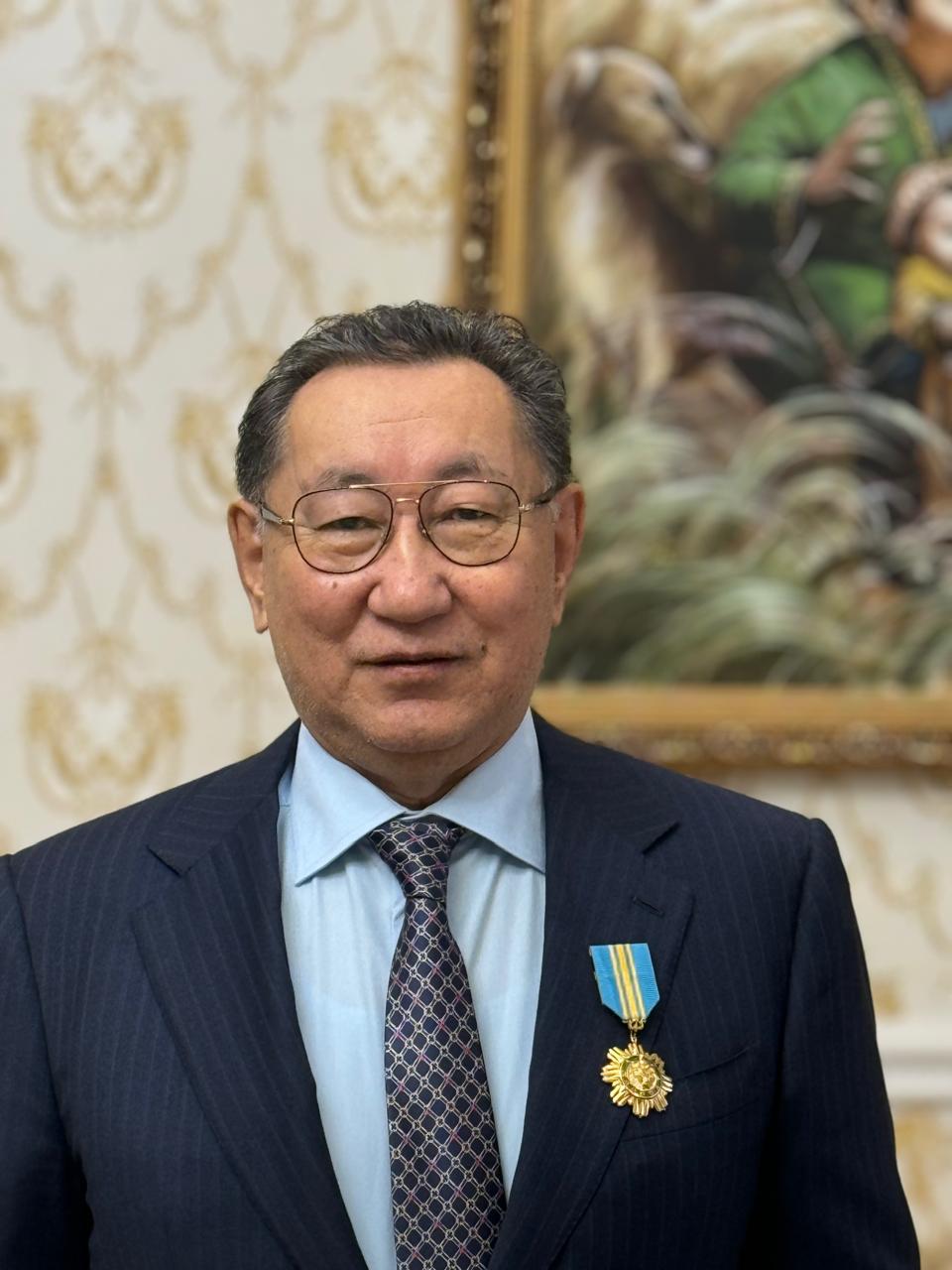
Omirserik KOZHABAEV,
Chairman of the Public Association,
Retired Judge of the Supreme Court of the
Republic of Kazakhstan
Comments powered by CComment