

The constitutional reform of 2026, as an expression of the unified will of the people, marked the beginning of a new stage in the development of our state. One of its key milestones was the adoption by the people, through a nationwide referendum on March 15 of this year, of the new Constitution of Kazakhstan. This has made it possible to define the main directions of the state’s democratic development based on an unbreakable historical link and continuity of generations, reliance on the principles of unity and solidarity, interethnic and interfaith harmony, and the values of culture and education, science and innovation.
"The Constitution is the new foundation for a strong, energetic, and competitive Kazakhstan," noted President Kassym-Jomart Tokayev at a ceremonial event dedicated to the adoption of the Constitution. "This document continues the traditions of the laws of the Great Steppe, demonstrating an unbreakable historical connection and continuity of generations. The updated Basic Law meets the demands of the present day while at the same time being a continuation of the centuries-old history of our statehood. The Constitution can rightly be called a truly People’s Law, because in it the spirit of patriotism and heroism, the traditions inherited from our ancestors, are closely intertwined with creativity and innovation."
The historic significance of the new Constitution of Kazakhstan is that it has brought domestic law closer to democratic standards, creating a legal and regulatory framework for qualitative changes in the political modernization of the state’s and society’s core institutions. Accordingly, the Basic Law is intended to become the foundation for forming a legal and political arena that will promote the comprehensive democratic development of society, strengthen national identity, and ensure human rights, laying the groundwork for the unity and solidarity of Kazakh society based on the principles of popular sovereignty and social justice.
At the same time, during the constitutional reform, not only domestic constitutional and legal experience was synthesized. The new Constitution has absorbed the best of global constitutional practice, serving as a guarantee of stability in the state-building of a Strong and Just Kazakhstan.
The Preamble – as an introductory part of the state’s Basic Law, concisely characterizing the main aspirations and goals, historical conditions and motives for its adoption, and preceding its sections and chapters – is provided for in many modern constitutions. In this regard, the preamble to the 2026 Constitution of the Republic of Kazakhstan solemnly proclaims: "We, the united people of Kazakhstan, strengthening statehood on the primordial Kazakh land, preserving the continuity of the thousand-year history of the Great Steppe, affirming the unitary nature of the state, the inviolability of its borders and territorial integrity, following the idea of a Just Kazakhstan and the principle of Law and Order, declaring unwavering respect for the rights and freedoms of man and citizen, relying on the principles of unity and solidarity, interethnic and interfaith harmony, guided by the values of culture and education, science and innovation, recognizing the need for careful stewardship of nature, striving for peace and friendship with all countries, conscious of our high responsibility to future generations, adopt this Constitution – the Basic Law of the Republic of Kazakhstan."
In the Preamble to the Basic Law, the people proclaim the historical goals and motives for its adoption, the key principles and values underpinning society and the state, and the main political and legal tasks of the state, which determine its content. The Preamble to the Constitution also carries a conceptual and ideological load, as it rests on solid foundations rooted in universal human values, explaining the meaning and spirit of its future application.
Although the Preamble to the Basic Law does not contain normative prescriptions formulated according to the rules of legislative drafting, it is simultaneously an integral part of a unified constitutional text, which, according to paragraph 2 of Article 5 of the Constitution, has "supreme legal force and direct effect throughout the territory of the Republic of Kazakhstan," and is universally recognized as important for interpreting all provisions of the Constitution and current laws.
Accordingly, when interpreting the Basic Law as a whole and its individual norms, the Constitutional Court of the republic and state bodies implementing constitutional norms are obliged to rely on the content of the preamble, since no norm within the text of the Basic Law can be interpreted or understood as contradicting the goals and motives set forth in its Preamble.
Thus, the Preamble to the Constitution provides legally binding guidelines that aid in understanding, interpreting, and implementing all of its content in accordance with the goals, motives, and genuine meaning of its adoption by the people of Kazakhstan, having the same legal significance as the norms of the main body of the Constitution. In this regard, several structural political and legal properties can be identified within its Preamble that serve as necessary normative benchmarks for the functioning and development of society and the state.
First, the preamble references the people of Kazakhstan as the substance of the state, who, exercising their sovereign right, adopt this Constitution, defining the goals of the republic as an independent state recognized by the global community. This sovereign right of the people is self-evident, as the state of Kazakhstan is precisely the publicly organized people – the political organization of citizens based on democratic values.
In this connection, the foundational principle of the Constitution has become the principle of popular sovereignty, which holds that the people are the basis of the Republic of Kazakhstan. Paragraph 1 of Article 4 of the Constitution proclaims: "The people of Kazakhstan are the sole source of state power and the bearer of Sovereignty." From this fundamental provision of the Constitution, it follows that state power in Kazakhstan emanates solely from the people, belongs entirely to them as the sovereign possessor and bearer of state power, which belongs to no one else.
Therefore, the Basic Law refers to state power as the supreme political will of the people and the political capacity of the sovereign people to regulate social relations according to their own will and in their own interests. Only the genuine will of the people makes the power of the state lawful and legitimate.
Second, the Preamble to the Basic Law, inextricably linked to the history of the Kazakh people and their deep aspiration for sovereignty and independence, enshrines the historical preconditions and conditions for the adoption of the Constitution by the people of Kazakhstan, united by a common historical destiny and strengthening statehood on the primordial Kazakh land. The provision of the Preamble – "strengthening statehood on the primordial Kazakh land, preserving the continuity of the thousand-year history of the Great Steppe" – means that the people of Kazakhstan remember and cherish their historical past, recognize and maintain an unbroken continuity with the state-legal traditions of the Kazakh people as the state-forming nation.
As President K.-J. Tokayev emphasized at the third meeting of the National Kurultai "A Just Person – Honest Work – Fair Reward": "To move forward confidently, we must fully appreciate the scale of our national history, protect and promote our cultural heritage. Kazakhstan is the direct successor of the nomadic civilization of the Great Steppe. The Ulus of Jochi, known worldwide as the Golden Horde, has always been the recognized pinnacle of state-building across the vast expanses of Central Eurasia. The geopolitical legacy of this medieval power served as fertile ground for the emergence of several Eurasian states, including the Kazakh Khanate. ... The Ulus of Jochi occupies a significant place in the tradition of Kazakhstan’s statehood because the past, present, and future of our country are closely intertwined with its historical heritage. It is important that the perception of the Golden Horde in the world be inextricably linked precisely with Kazakhstan."
In this regard, it must be noted that the idea of conceptually reflecting in the Preamble of the Basic Law the continuity of the statehood of the Kazakh people, which has a centuries-long history of development, was comprehensively developed in the fundamental scholarly works of the renowned domestic legal scholar A. Salimgerei, Director of the Institute of State and Law at Al-Farabi Kazakh National University.
Third, the Preamble defines the goals for the achievement of which the Constitution is adopted: the legislator – the people of Kazakhstan – following the idea of a "Just Kazakhstan" and the principle of "Law and Order," declares unwavering respect for individual rights and freedoms, reliance on the principles of unity and solidarity, interethnic and interfaith harmony, orientation toward the values of culture and education, science and innovation, recognition of the need for careful stewardship of nature, striving for peace and friendship with all countries, and awareness of a high responsibility to future generations.
The lofty goals of the people of Kazakhstan, proclaimed in the Preamble of the Basic Law, underlie all constitutional principles and norms; they permeate the entire normative content of the Constitution, thereby determining the state’s most important obligations to formulate and implement the measures necessary to realize the high goals of the people, following the idea of a Just Kazakhstan and the principle of "Law and Order."
The Preamble’s provisions regarding the people’s commitment to the idea of a "Just Kazakhstan" and the principle of "Law and Order," and declaring unwavering respect for human and civil rights and freedoms, focus attention on the state’s social responsibility to citizens in order to ensure social justice, guarantees of the rights and freedoms of citizens, equal opportunities for all citizens regardless of social status, race or ethnicity, and support for vulnerable groups of the population.
The state is obliged to fully respect the freedoms and rights of Kazakhstani citizens, to ensure equality of citizens and their associations before the law and the courts. Thus, Section II "Fundamental Rights, Freedoms, and Duties" (Articles 12-41) and several provisions in other sections of the Constitution (e.g., Articles 5, 6, 7, 8, paragraph 2 of Article 12, subparagraphs 3 and 5 of Article 73, paragraph 1 of Article 77, Articles 79, 85, 86) are entirely dedicated to the establishment of fundamental rights and freedoms of the individual.
The rights and freedoms of man proclaimed by the Constitution are fundamental in the development and adoption of laws and other normative legal acts that establish the conditions and procedures for the exercise of these rights and freedoms. Accordingly, human rights and freedoms should determine the content and application of laws and other legal acts adopted by state bodies. Moreover, it is precisely the rights and freedoms of the individual that establish not only the limits of state power – beyond which it cannot venture without risking distortion of the people’s true will and setting itself against the people – but also the external boundaries of popular sovereignty itself. The people cannot be sovereign if each member of society does not enjoy fundamental rights and freedoms genuinely guaranteed by law and the courts, and if citizens’ fulfillment of their legally prescribed duties is not ensured in society.
The constitutional formula in the Preamble – relying on "the principles of unity and solidarity, interethnic and interfaith harmony" – means that the state must guarantee a state of society in which there is harmonious mutual understanding among all its social parts and solid legal foundations are established to prevent social conflicts. Social unity, solidarity, and harmony in society are precisely the foundation of the state’s stability, ensuring its political, social, and economic integrity. In a multi-ethnic and multi-faith society, social harmony and solidarity contribute to strengthening national identity and integration, constituting an important aspect of political stability and sustainable development.
On the basis of social harmony, societal unity, respect for the diversity of its cultural traditions, a legal framework is formed for interaction between various institutions of power, and full-fledged conditions are created for political dialogue among various institutions of civil society. Recognition of the multi-ethnic composition of the population and the desire to strengthen interethnic harmony reflect the legislator’s aspiration to establish social harmony and peace in a society free from political and social conflicts, where there is genuine mutual understanding among all social forces.
All of this allows the Constitution to perform an integrative function, helping to strengthen social unity, internal coherence, and purposefulness in the development of both the state and society as a whole. Thus, the Constitution, as the Basic Law, by helping to structure various social institutions into a lawful civil society, prevents the emergence of barriers between the state and society, and between the state and the individual. In this regard, the Constitution, as the cornerstone of societal unity, establishes the legal foundations for the most essential aspects of civil society’s functioning, defining the fundamentals of the individual’s legal status, their relationship with the state, and the foundations for the formation of democratic, legal, and social statehood.
The constitutional aspiration of the people of Kazakhstan "for peace and friendship with all countries," fully elaborated in Article 10 of the Basic Law, means that the republic fully recognizes the principles and norms of international law concerning friendly relations and cooperation between states, in accordance with the UN Charter and other key documents of the UN and other international organizations.
The profoundly popular and human-rights-oriented Preamble of the Basic Law, reflecting Kazakhstan’s desire to actively participate in international affairs, respect international human rights standards, cooperate with other states and international organizations, helps shape a positive international image of Kazakhstan, which in turn can facilitate foreign investment and strengthen diplomatic ties.
This high aspiration of Kazakhstan, as an integral part of the global community, means its understanding – as a full member of the UN and other authoritative international organizations – of its position in the system of international relations. In this regard, Article 10 of the Constitution of the republic, ensuring Kazakhstan’s integration into the system of international relations, solemnly proclaims: "The Republic of Kazakhstan respects the principles and norms of international law, pursues a foreign policy of peace and cooperation with interested states, non-interference in their internal affairs, and peaceful resolution of international disputes."
The words of the constitutional Preamble – "conscious of our high responsibility to future generations" – express the will of the people to assume responsibility for the fate of the country as an independent state. The Constitution, as the load-bearing framework of society’s life, acts to achieve the democratic ideals of state-building on legal principles that it defines, serving the interests not only of the present but also of future generations.
The Preamble’s provisions on orienting the state and society "toward the values of culture and education, science and innovation" reflect the state and society’s aspiration for sustainable socio-economic development, support for innovations and technologies necessary for all segments of the population to access quality education, preserve cultural heritage, and create conditions for economic prosperity.
The Preamble’s recognition of the "need for careful stewardship of nature" signifies that the state, considering global challenges related to climate change and environmental protection, will place special emphasis on protecting the natural environment, strictly fulfilling its obligations to protect nature, rationally use natural resources, and ensure environmental security.
The solemn words of the Constitution’s Preamble – "adopt this Constitution – the Basic Law of the Republic of Kazakhstan" – certainly have direct legal significance, as the adoption of the Basic Law by the people through a nationwide referendum legitimizes the Republic of Kazakhstan as an independent state in the global community. The formula "The Constitution – Basic Law of the Republic of Kazakhstan" indicates that the Constitution, by its very essence, is the highest expression of the legislative will of the people, expressed through a popular vote – a will aimed at establishing such foundations of the state and society as embody universally democratic principles, proceeding from the recognition of the human being as the state’s highest value. Therefore, by its source of origin, the Constitution of the Republic of Kazakhstan appears as the Basic Law of the state and society precisely because it was adopted by the people through a nationwide referendum, and not as a law enacted by a state body.
As can be seen, the Preamble to the Basic Law, defining the motives, conditions, and goals for its adoption, is a direct, organic part of the Constitution, possessing a special legal property: the content of the entire constitutional text cannot contradict the motives and goals of its adoption set forth in the Preamble. Accordingly, although the Preamble to the Constitution does not contain operative legal norms formulated according to the rules of legislative drafting, it is nonetheless an integral part of the unified constitutional text, determining the motives and goals for its adoption, for the realization of which the Basic Law is enacted.
All this demonstrates that the Preamble to the Constitution, by outlining the fundamental principles on which Kazakh statehood is built, is an important component of the Basic Law, as it sets the key tone and foundation for understanding the entire body of operative law of the state. Even though the provisions of the Constitution’s Preamble do not constitute a collection of strictly regulated constitutional norms, they have special legal significance. By defining the motives and goals for the adoption of the Basic Law of the state, the Preamble’s provisions establish benchmarks for the development of the country’s social and state structure, linking its past, present, and future; they set forth the state’s general obligations to society and citizens; and they have foundational significance for the interpretation of the Constitution by the Constitutional Court of the Republic of Kazakhstan and for law enforcement practice.
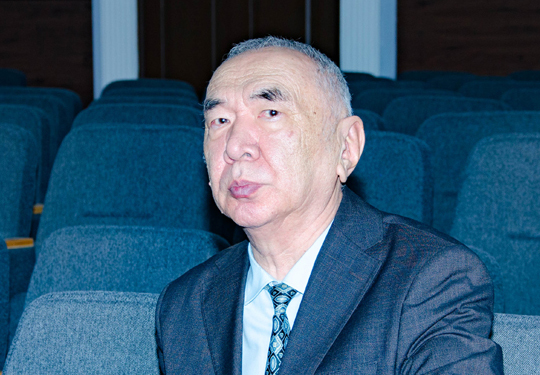
By Kabdulsamikh AITKHOZHIN,
Doctor of Law, Academician of the Russian Academy
of Natural Sciences (RAEN), Professor at Kunayev University
Comments powered by CComment