

Over recent years, the Administrative Procedural and Procedural Code of the Republic of Kazakhstan has become one of the most significant institutions within the judicial system. Today, under this Code, the country's administrative courts hear disputes between citizens and businesses on one side and state bodies on the other. It is here that decisions of local executive bodies (akimats), actions of public officials, land relations issues, licensing matters, and numerous other conflicts arising between citizens and the state are challenged.
The adoption of the Administrative Procedural and Procedural Code of the Republic of Kazakhstan marked the introduction into national administrative justice of a number of legal mechanisms characteristic of the European model of administrative justice. These include the active role of the court in establishing the factual circumstances of a case, placing the burden of proving the lawfulness of a contested decision on the administrative body, the court's right to independently request and examine evidence, the application of the principles of protection of trust and legitimate expectations of participants in administrative legal relations, as well as the development of out-of-court settlement procedures for public-law disputes. These institutions are designed to ensure a genuine balance between the citizen and the state body and reflect the modern concept of administrative justice that has evolved in the countries of continental Europe.
Institutions of administrative justice operate in the majority of European states, including France, Germany, Poland, and Austria. In France, administrative procedures and administrative litigation are regulated by separate legislative acts – the Code of Relations between the Public and the Administration (Code des relations entre le public et l'administration) and the Code of Administrative Justice (Code de justice administrative). A similar approach is applied in Germany, where the Law on Administrative Procedure (Verwaltungsverfahrensgesetz) and the Code of Administrative Court Procedure (Verwaltungsgerichtsordnung) are in force, distinguishing between the administrative activities of public authorities and the judicial resolution of administrative-law disputes. Germany's three-tier system of administrative courts, with a high level of protection for citizens against state bodies—where the court reviews not only formal legality but also compliance with the principles of proportionality, equality, and good faith—distinguishes the German model as the most advanced system of justice.
Unlike the majority of foreign states, where administrative procedures and litigation are regulated by separate legal acts, the Administrative Procedural and Procedural Code of the Republic of Kazakhstan combines administrative-procedural and procedural norms within a single codified instrument.
With the entry into force of the Administrative Procedural and Procedural Code of the Republic of Kazakhstan, the administrative procedures carried out by state bodies have been systematized, and an independent administrative judiciary has been established to resolve public-law disputes between private individuals and administrative authorities.
The effectiveness of administrative justice depends not only on the quality of legislation. Equally important is the question: who exactly adjudicates court cases, and how are the subjects of justice in administrative courts selected?
An examination of international experience shows that in most states, administrative justice is viewed as a distinct branch of justice requiring a high degree of professional specialization.
Various models of organizing administrative courts have emerged in European countries. In some states, independent systems of administrative justice operate; in others, specialized chambers are integrated into courts of general jurisdiction. Despite these differences, most states agree on one point: a candidate for the position of administrative judge must possess deeper knowledge of public law and the specifics of citizen-state relations (in some countries, prior experience in public administration is mandatory for judicial candidates).
According to research and opinions of the Venice Commission of the Council of Europe, European states employ various models for selecting, training, and promoting judges, including career-based models—through seniority and professional merit—as well as competitive mechanisms for building the human resources capacity of the judiciary.
First and foremost, it should be noted that three main models of administrative justice have developed in Europe.
The first model involves the establishment of an independent branch of administrative courts (a variation of meritocratic selection). This approach is applied, for example, in Austria, Bulgaria, Lithuania, Poland, and Spain. It is characterized by a high degree of judicial specialization and the presence of independent judicial self-governance mechanisms.
The second model is based on the creation of specialized administrative chambers or panels within courts of general jurisdiction. This approach is used, for instance, in Georgia.
The third model is a combined one. It combines specialized administrative courts with elements of a general judicial approach. This model is characteristic of France, Estonia, and Ukraine.
Despite differences in organizational models, a synthesis reveals that most states pay close attention to the professional specialization of candidates for administrative judicial positions.
In global practice, there is no single classification of judicial selection models. Conventionally, several models of judicial selection and appointment can be distinguished (career-based; professional-competitive (commissions/judicial councils); political (appointment or election)). A comparative legal analysis allows for the identification of four commonly accepted models for selecting administrative justice judges.
The first is the career, or continental European, model. It is based on early competitive selection, specialized training in judicial schools, and gradual career advancement.
The second model is implemented through independent judicial appointment commissions. Here, the candidate's professional experience, competencies, and integrity are of paramount importance.
The third model is associated with judicial councils, which directly participate in assessing candidates' competencies and formulating recommendations for appointment.
The fourth model is competency-based. It is based on the assessment of specific professional skills of the candidate: legal knowledge, analytical thinking, legal writing, argumentation skills, and professional ethics.
Of practical interest is the emphasis on experience in public administration and administrative law. In Bulgaria and Lithuania, enhanced qualification requirements and significant legal seniority are imposed on candidates for administrative judge positions, the length of which depends on the level of the court and the position held. In Georgia, importance is attached to the assessment of integrity and professional competence, including communication skills, the ability to argue, and adherence to ethical standards.
In France, administrative justice has formed an independent corps of administrative judges and a professional environment. Candidate selection is carried out primarily on a competitive basis and focuses on assessing the level of training in public law, analytical abilities, and compliance with professional ethics requirements. An administrative judge in France is seen as a professional in the field of public-law relations with high ethical qualities.
In the process of training a future judge, the candidate's capacity for ethical conduct and institutional loyalty plays an indispensable role—qualities that cannot be assessed exclusively through examinations.
In Germany, the training of candidates for judicial positions is based on a unified approach to legal education, comprising university studies, two state qualifying examinations, and mandatory practical training. When appointing judges, primary importance is attached to examination results, professional competencies, and the candidate's personal qualities.
The German model is noteworthy for combining a high level of professional requirements with the participation of democratically legitimized institutions in the decision-making process on appointments. In several federal states, personnel decisions are made with the involvement of special judicial selection committees, which only enhances the objectivity of the selection procedure.
The experience of Italy is also of interest, where the formation of the corps of administrative magistrates is carried out through an independent competitive selection process. Appointments to the positions of judges of regional administrative tribunals are made based on the results of a specialized competition focused on assessing candidates' professional training in public law. This approach ensures a high level of specialization among administrative justice judges.
In Austria, importance is attached to the practical legal training of candidates. Appointment to the position of a judge of an administrative court requires a higher legal education and at least five years of professional legal experience. The core of the Austrian model is the recruitment to administrative justice of specialists with experience in public administration, which contributes to the formation of a judiciary with a deep understanding of public governance.
In Poland, appointment to the position of an administrative court judge does not require mandatory completion of judicial training or passing a judicial examination. The selection process focuses on the candidate's level of knowledge in administrative law and public administration, as well as professional legal experience. At the same time, researchers note that the selection criteria in Poland are formulated too broadly and are difficult to verify objectively, which complicates the impartial assessment of candidates' qualifications. In practice, a significant portion of administrative court judges in Poland are appointed from among judges of courts of general jurisdiction who already have experience in administering justice.
A synthesis of various approaches reveals several common patterns. In virtually all countries, there is a professional filter aimed at assessing the candidate's knowledge specifically in the field of public law. In addition, mechanisms of expert evaluation, internships, mentoring, and specialized training for future judges are extensively utilized.
In terms of content, many provisions of the Administrative Procedural and Procedural Code of the Republic of Kazakhstan are close to the approaches developed by the administrative-law doctrine and practice of administrative courts in Germany.
Over a relatively short period, the national administrative justice system of the Republic of Kazakhstan has undergone a distinctive developmental path. Specialized administrative courts have been established, the Administrative Procedural and Procedural Code is in force, and judicial practice for adjudicating public-law disputes has been formed.
The next step could be the further improvement of professional training for candidates for administrative court judgeships. This does not entail revising the current procedure for judicial appointments. A more promising direction is the development of digitized mechanisms for assessing candidates' professional competence. This may include in-depth testing of knowledge of administrative legislation, solving practical virtual cases simulating real disputes between citizens and state bodies, as well as involving sitting administrative judges and legal scholars in the evaluation process.
Of particular significance is the mechanism of professional support for newly appointed judges. International experience (e.g., Ireland) shows that mentoring programs and specialized training contribute to more effective professional adaptation of young judges, the development of practical skills in administering justice, and the mastery of judicial standards. Such mechanisms help shorten the period of acclimatization to the position and ensure continuity of professional approaches within the justice system.
Today, administrative justice is becoming one of the primary tools for strengthening citizens' trust in state institutions. The effectiveness of judicial protection of the rights of citizens and businesses depends on how professionally prepared the judges are.
Global experience confirms: a high standard of administrative justice begins with the quality of selection of those tasked with ensuring a balance between the interests of the state and the rights of citizens. The continued improvement of selection procedures and professional development for administrative court judges remains one of the priority areas of the Supreme Judicial Council of the Republic of Kazakhstan and is of considerable interest for the further modernization of the country's administrative justice system.
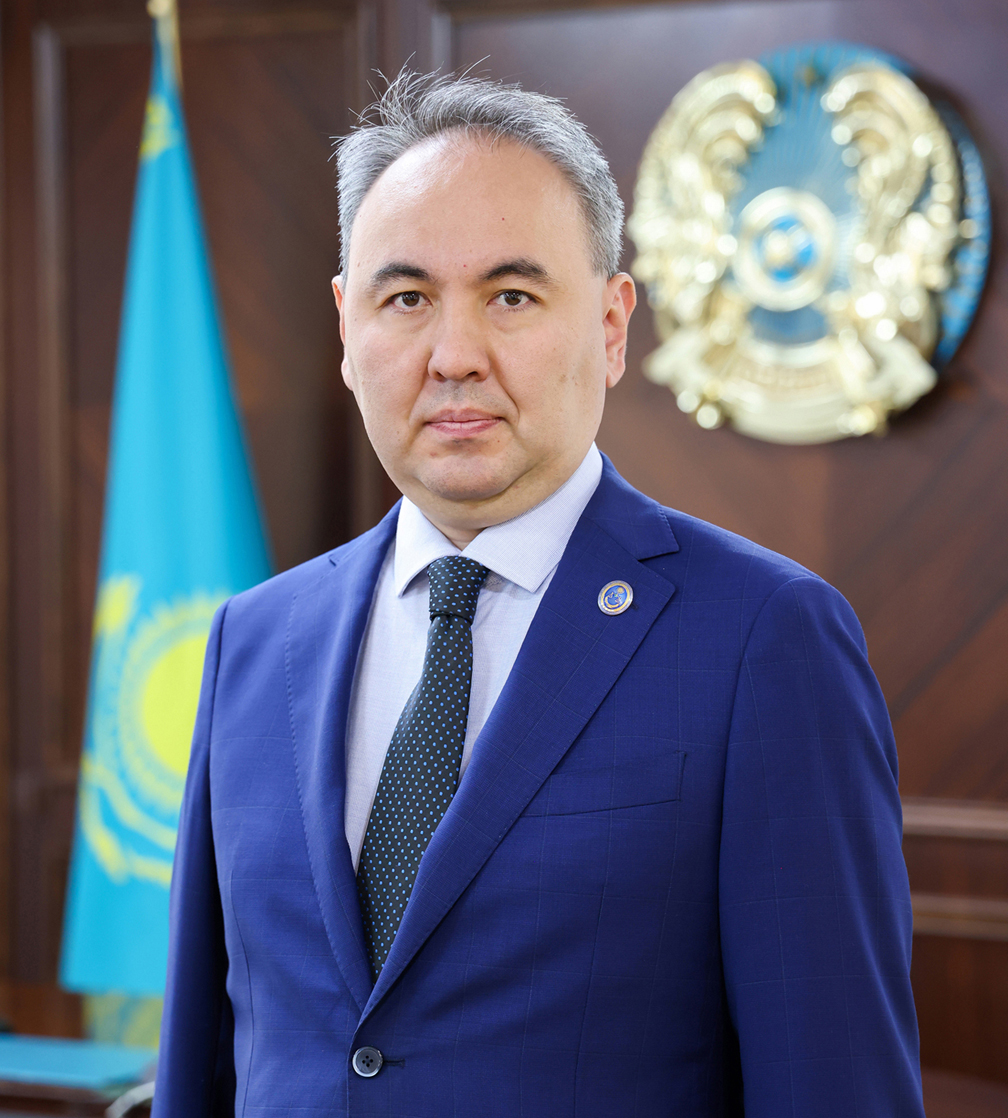
Yernar BEGALIYEV,
Member of the Supreme Judicial
Council of the Republic of Kazakhstan
Comments powered by CComment