

This year marks ten years since the establishment of Public Councils for Interaction with Courts.
The legal basis for their activities was the Constitutional Law "On the Judicial System and the Status of Judges of the Republic of Kazakhstan" and the Regulation approved by a decision of the Supreme Judicial Council of the Republic of Kazakhstan on February 17, 2016.
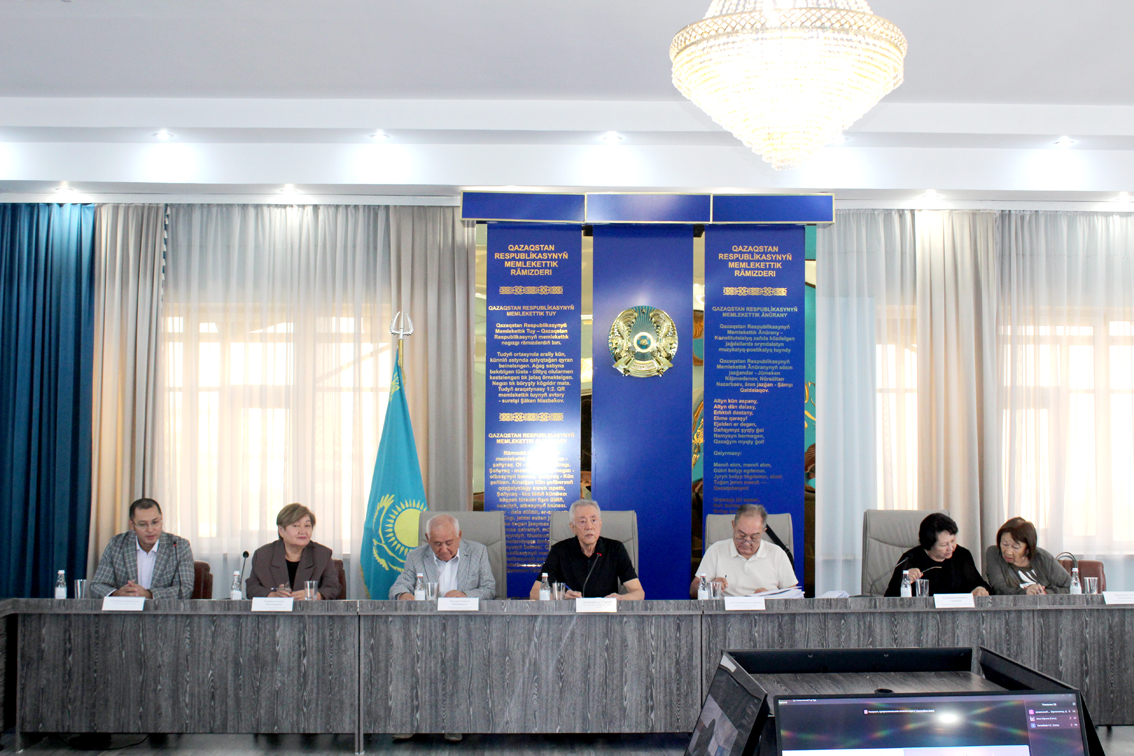
From that moment, the Councils began their work as consultative and advisory bodies under regional courts and courts of cities of republican significance, becoming one of the instruments of public trust. Over the decade, the Councils have demonstrated that they are an important testament to the observance of the principles of openness and the participation of civil society in the formation of the judiciary.
The initiative to create Public Councils under the courts was linked to a change in approaches to the procedure for selecting candidates for the position of judge, which for many years remained opaque to the general public. Candidates were often not informed of the reasons for rejection, and the procedure itself was not covered in the media, which gave rise to rumors about so-called "telephone law" and behind-the-scenes agreements.
Therefore, one of the driving forces of the reform was the need to establish a direct connection between state bodies and society.
The main goal of creating Public Councils is formulated in the normative documents clearly and concisely: assessing the moral and ethical qualities of candidates for the position of judge and involving citizens and public associations in the selection procedures.
Behind this formulation lies a deep meaning. After all, a judge is not merely a professional lawyer who knows the laws. This is a person who must earn the right to administer justice, inspire trust, and possess an impeccable reputation and high moral principles.
The work of the Public Council for Interaction with Courts of the city of Almaty, chaired by veteran of the judicial system Yerbolat Uzakovich Bagayev, is built on the assessment of these qualities.
It should be noted that the competence of the Councils does not include the consideration of specific court cases or the assessment of the quality of the administration of justice. This is the prerogative of the judicial system itself, including appellate and cassation instances. The Council evaluates the person, not their professional decisions.
The composition of the Council is formed on a voluntary basis from among authoritative representatives of the public. These include representatives of the legal community, non-governmental organizations, trade unions, the education sector, veterans, journalists, as well as retired judges with extensive experience.
The key requirement is that the Council should not include current state officials, which guarantees its independence and objectivity.
According to the rules, members of the Council are approved by a plenary session of the regional court for a term of two years. Meetings are held publicly, and each decision is reasoned. At its meetings, the Council issues both positive and negative conclusions on a candidate, and these conclusions are sent for consideration to the Supreme Judicial Council and the regional court. Despite their advisory nature, the conclusions of the Council in the process of making personnel decisions are difficult to overestimate.
All members of the Public Council take a responsible approach to making one decision or another. And this is by no means a formal selection procedure, because the public body acts as a kind of "filter" that screens out unprepared or unworthy candidates.
Practice has shown that among the applicants there are people with an insufficient professional level or with problems with the law. At each meeting, the number of candidates being evaluated for the positions of chairmen of district and equivalent courts, or participating in the competition for vacant positions of judges of district and equivalent courts, ranges from 40 to 80 people, and not all of them pass the public assessment. This indicates that the Council effectively fulfills its role.
By contributing to increasing the openness of the judicial system, the Public Council demonstrates that the selection of judges is not a closed process, but a procedure in which representatives of civil society participate. This helps to reduce distrust of the judiciary and combat corruption risks at the appointment stage. And the very participation of media representatives in the work of the Council gives the process publicity.
By making the process of forming the judiciary more transparent, fair, and open to society, the institution of public councils for interaction with courts in Kazakhstan has justified its purpose, providing "feedback" between society and the judicial system.
A thorough approach to assessing the moral character of judges and candidates for judicial positions contributes to strengthening the human resources potential of the judiciary and, consequently, to increasing trust in justice as a whole. And this is an important element of building a rule-of-law state, where representatives of the public have the opportunity to influence the quality of the judiciary.
Asem SAKENOVA
Photo: Dinmukhamed Aitbayev
Comments powered by CComment