

The III Congress of Judges of the Republic of Kazakhstan, held on June 6, 2001, in Astana, occupies a special place in the history of the establishment of the country's independent judicial power.
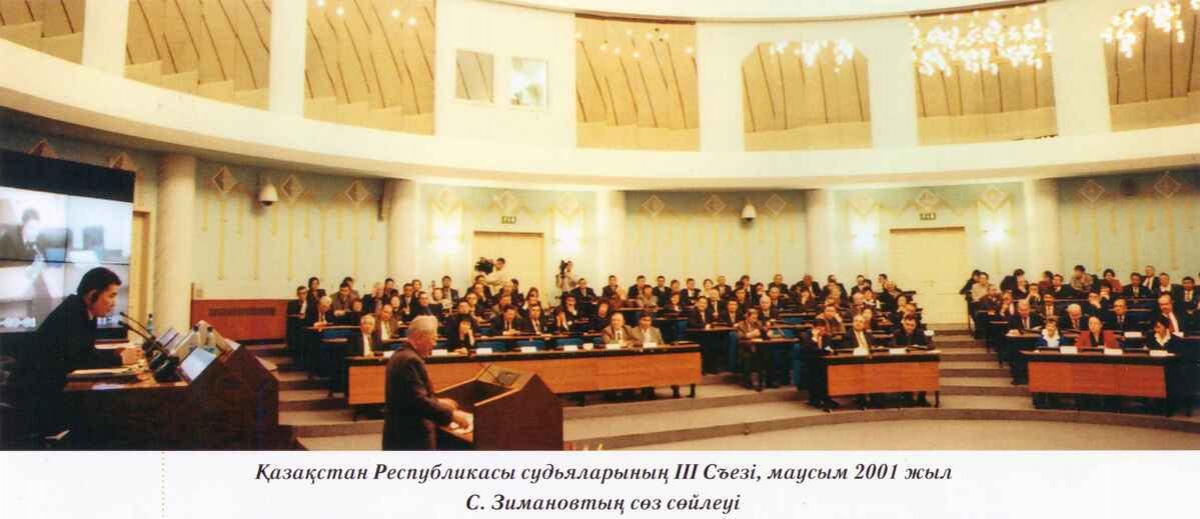
The forum of judges took place during a period of active development of judicial and legal reform and served as a platform for discussing further steps to strengthen the independence of courts, improve the efficiency of justice, and form a highly professional corps of judges. Among the participants of the congress were deputies of the Senate and Mazhilis of Parliament, the Prosecutor General, and the Minister of Justice.
Participants in the discussion noted that by the early 2000s, the foundations for the institutional establishment of the judicial system were being laid in Kazakhstan. The Constitutional Law "On the Judicial System and the Status of Judges of the Republic of Kazakhstan," adopted on December 25, 2000, enshrined new approaches to the organization of judicial power, strengthened guarantees of the independence of judges, and defined mechanisms for the organizational and material-technical support of the activities of courts.
It was precisely in this context that the III Congress of Judges acquired particular significance: its task was not only to discuss current issues of the work of courts but also to determine guidelines for the further development of the judicial system. In the speech of the Head of State, it was emphasized that the process of forming the corps of judges is proceeding on a genuinely democratic basis. The main outcome of the current stage of judicial and legal reform was said to be that people had finally come to believe in the court and increasingly began turning to the third branch of power for the protection of their rights, as is customary in a civilized society.
In this regard, an important place was occupied by the issue of improving the efficiency and accessibility of justice. The congress outlined the need for further delimitation of jurisdiction between judicial instances and the simplification of certain judicial procedures. One of the practical steps was the removal of criminal cases at first instance from the jurisdiction of the Supreme Court.
The preceding reforms provided for the removal of courts from the system of the Ministry of Justice and the creation of a Committee for Judicial Administration under the Supreme Court, to which the functions of organizational and material-technical support of courts were transferred. Such an approach was viewed as an important element of the institutional separation of the judicial system from the executive branch.
Another area was the issue of specialization of courts. At the congress, the need was outlined for the development of specialized economic and administrative courts.
This was also facilitated by new social relations generated by the conditions of a market economy. Subsequently, this step received practical development: by Decree of the President of the Republic of Kazakhstan dated February 9, 2002, Specialized Inter-District Economic Courts were created in all regions. From 2004, the further development of court specialization was embodied in the created inter-district specialized administrative courts, whose jurisdiction primarily included cases arising from the administrative-authoritative powers of state bodies and local self-government.
These courts were established by Decree of the President of the Republic of Kazakhstan dated September 9, 2004, and began operating in all regional centers on January 1, 2005. In 2006, by Decree of the Head of State, a Specialized Financial Court was established, authorized to consider, in accordance with the legislation of the republic, civil-law disputes of participants of the Regional Financial Center of the city of Almaty.
By Decree of the President dated February 2, 2012, No. 266, "On the Establishment of Specialized Inter-District Courts for Cases Involving Minors and on Amendments to Certain Decrees of the President of the Republic of Kazakhstan," 16 specialized inter-district courts for cases involving minors were established across the country.
The experience of the specialized courts has shown the correctness of the decision taken and the viability of these structures of the judicial system.
The Laws of the Republic of Kazakhstan "On Arbitration Courts," "On International Commercial Arbitration," and the Normative Resolution of the Supreme Court "On the Application by Courts of Certain Norms of Legislation on the Enforcement of Decisions of Arbitration Courts," adopted during this period, opened a new page in the history of the development of alternative methods of dispute resolution in our country.
JUDICIAL ETHICS AND PROFESSIONAL RESPONSIBILITY
The delegates of the congress considered a number of measures aimed at developing professional standards of judicial conduct. The amendments and additions introduced to the Code of Judicial Ethics made it possible to specify in a new edition the requirements for a judge's conduct, objectivity, and honesty, enshrining the principle according to which a judge must make decisions on the basis of established facts, the law, and conscience, and must also avoid circumstances capable of casting doubt on his impartiality.
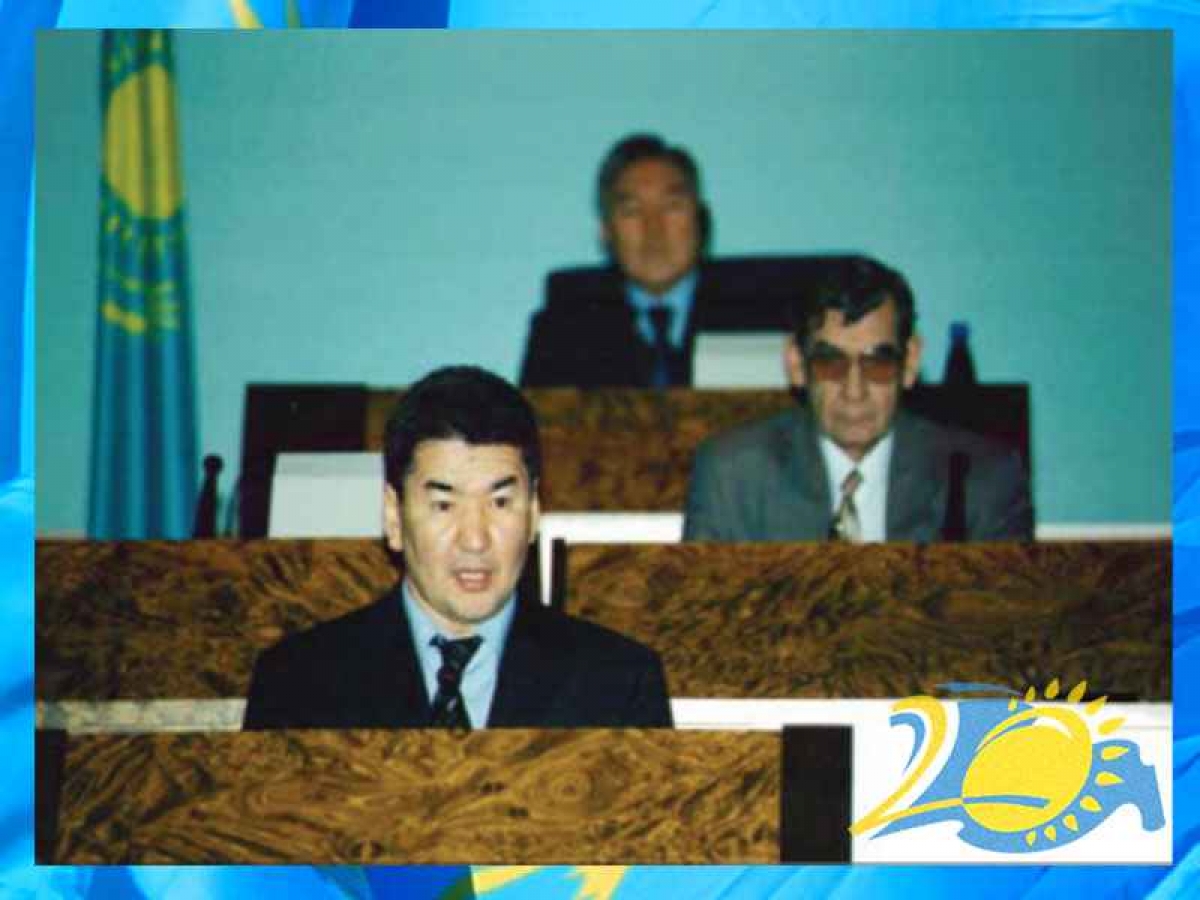
Thus, professional responsibility was considered inseparable from the independence of a judge. It was emphasized that the independence of judicial power presupposes not only the existence of corresponding institutional guarantees but also a high level of personal responsibility of each representative of the corps of judges. This provision is of fundamental importance for building public trust in the court: the independence and authority of judicial power must be reinforced by professionalism, legality, objectivity, and observance by judges of the norms of judicial ethics.
THE ROLE OF THE III CONGRESS IN JUDICIAL REFORM
The historical significance of the III Congress also lies in the fact that it took place at the junction of the formation of the basic institutions of an independent judicial system and outlined their further substantive development. If at the previous stages of reform institutional guarantees of judicial independence were being laid, the III Congress already outlined a broader range of tasks, from improving the structure of courts and delimiting jurisdiction to changing approaches to criminal policy and raising requirements for the professional conduct of judges.
The court was viewed not only as a state institution administering justice but also as a mechanism for the practical protection of the rights and freedoms of citizens. The Constitutional Law of 2000 directly defined the purpose of judicial power as the protection of the rights, freedoms, and lawful interests of citizens and organizations, as well as ensuring the implementation of the Constitution and legislation of the Republic of Kazakhstan.
By the Resolution of the III Congress of Judges, additions and amendments were made to the Charter of the public association Union of Judges.
The decisions and initiatives voiced at the congress were continued in subsequent transformations of the judicial system of Kazakhstan. In particular, this concerns the improvement of the delimitation of jurisdiction; the simplification of certain judicial procedures; and the consistent formation of a modern model of judicial power.
As already noted, a consistent course began toward the liberalization and humanization of criminal punishments, which, along with other measures, provided for the gradual narrowing of the scope of application of the death penalty. In December 2003, by Decree of the President "On the Introduction in the Republic of Kazakhstan of a Moratorium on the Death Penalty," a moratorium on the execution of the death penalty was introduced in the country until the issue of its complete abolition was resolved.
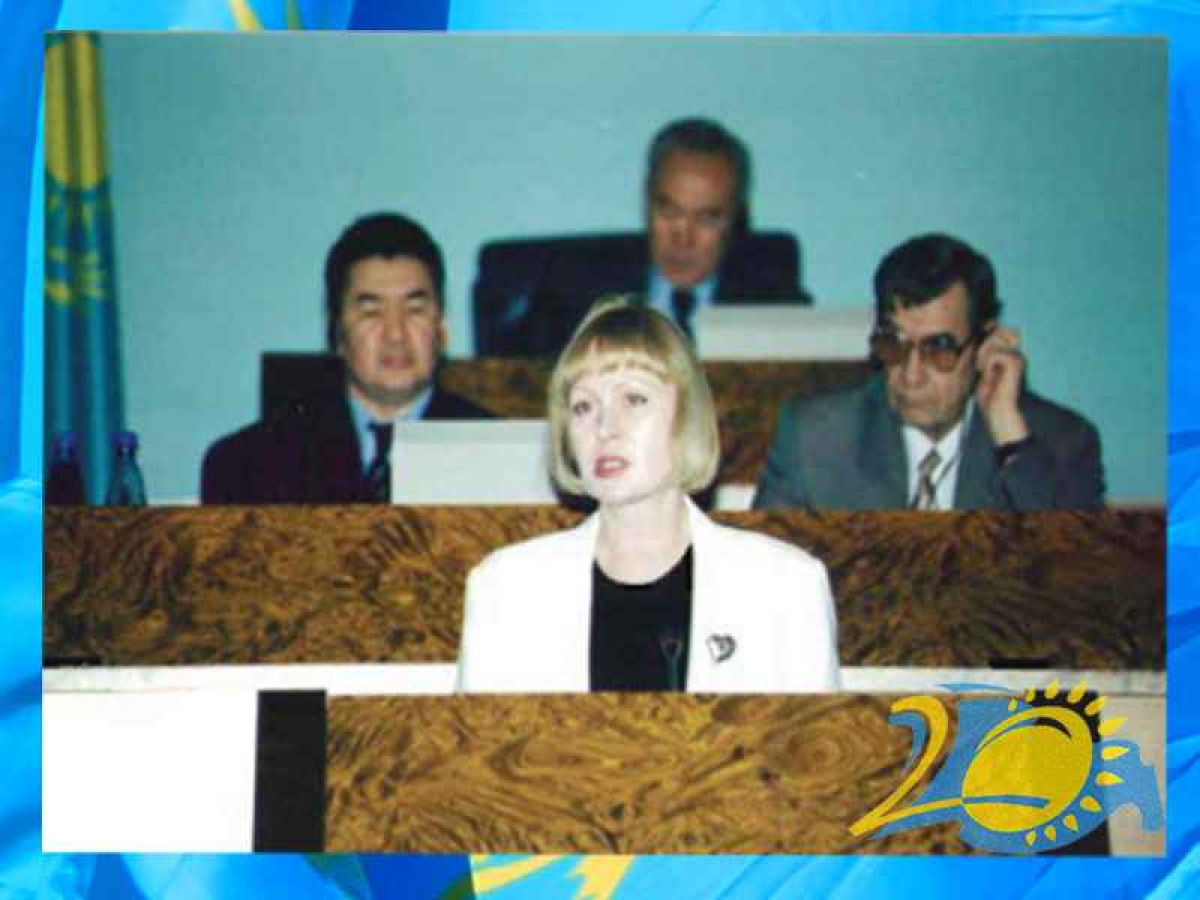
Among the measures to humanize criminal policy, an initiative was voiced at the congress to introduce the institution of jurors. Such a form of consideration of criminal cases, in the opinion of the delegates, raises many questions; however, as the Head of State noted, it is necessary to develop this system, "starting with grave cases for which the death penalty is provided."
All decisions adopted in this context fit into the broader process of building a system of separation of powers and strengthening the independence of the judicial branch of power.
It must be taken into account that the congress took place in the first decade of Kazakhstan's Independence. It was a period when new state institutions and the legislative framework were being formed simultaneously, and the young state needed an independent and effective judicial system with a professional and responsible corps of judges. The significance of the historical moment required from the participants of the congress a more concrete approach to the consistent development of judicial reform.
Therefore, the III Congress of Judges remained in the chronicle of domestic justice as an important milestone, thanks to the constructive decisions adopted and the long-term directions that received further development in legislation and judicial practice. It occupied a prominent place as a necessary stage of the judicial and legal reform of Independent Kazakhstan, which at the beginning of the 21st century defined priorities that were developed at subsequent congresses.
The fundamental changes initiated at the congress ensured not only the accessibility of justice for the population of the country but also almost completely eliminated restrictions on the ability to defend one's rights and substantially increased citizens' trust in the judicial system.
Akmaral ABDULOVA
Comments powered by CComment