

In recent years, the North Kazakhstan Region has been consistently strengthening its position as one of the country's key agrarian-industrial regions. The region demonstrates stable dynamics in industrial production, active attraction of investments, and systematic infrastructure renewal.
This was the focus of a series of extended meetings chaired by the regional Akim, Gauez Nurmukhambetov, during which the results of socio-economic development for 2025 were summarized, the performance of key sectors was reviewed, and specific tasks for the upcoming period were defined.
At the extended meeting, heads of departments and district akims reported on growth dynamics in the basic economic sectors, the implementation of state programs, and the effectiveness of business support measures.
Opening the event, the head of the region outlined the priorities for further work, noting the position of the Head of State.
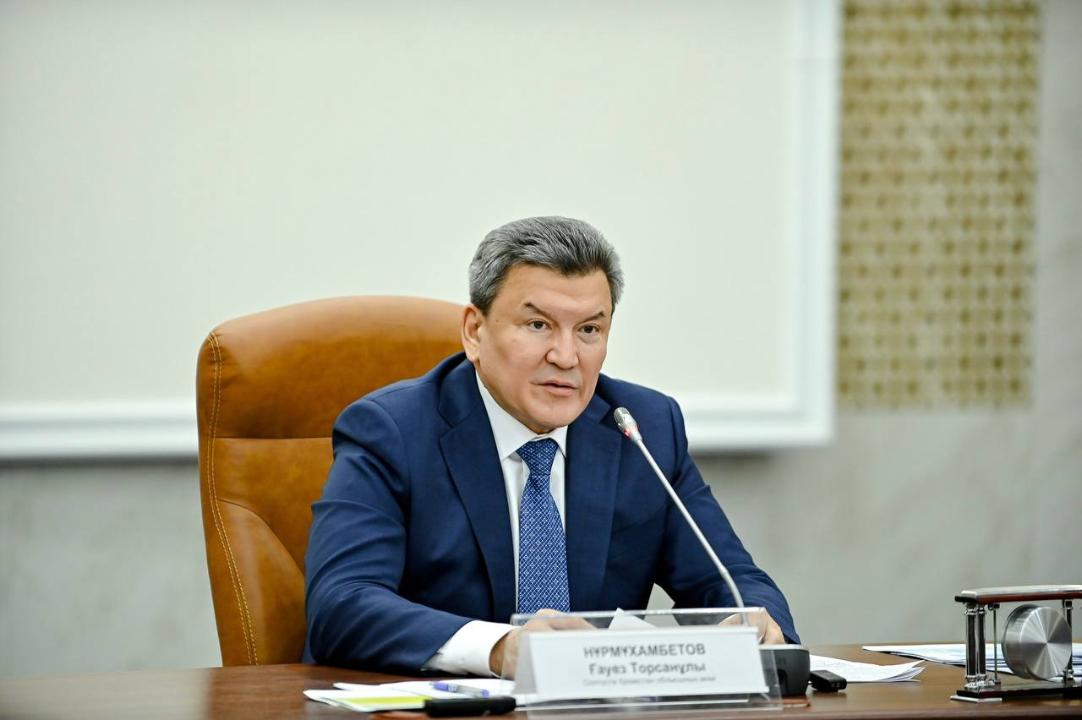
– As the President noted at the extended government meeting on February 10 of this year, the priority of our work is the sustainable development of the region and the achievement of concrete results for residents. These guidelines set the vector for all management decisions and further initiatives. Following last year's results, the region showed growth and development in all key economic sectors. Work in this direction will continue. Our strategic task is the formation of a sustainable and balanced economic model in which resources are directed to sectors with the highest returns. Among the priorities are the active attraction of investments, creating conditions for business, increasing the effectiveness of state support, and ensuring high-quality, long-term economic growth, – emphasized Gauez Nurmukhambetov.
Continuing the discussion, issues of human capital development and digitalization were considered. It was reported that an IT ecosystem has been formed in the region, aimed at improving the digital competencies of the population and creating equal opportunities for young people. It was emphasized that the implementation of these initiatives should contribute to strengthening the region's professional potential and expanding access to modern technologies.
Following the meeting, the regional akim instructed to ensure the implementation of specific tasks aimed at improving the quality of education and healthcare, developing social and engineering infrastructure, and increasing the level of comfort and well-being of the population.
– During the extended government meeting, the Head of State, Kassym-Jomart Tokayev, gave specific instructions to intensify work on attracting investments and developing the processing industry. These directions are priorities for us. The past year was a stage of qualitative changes for the region. The region is consistently strengthening its position as an agrarian-industrial region, demonstrating sustainable development of the industrial sector. Following the results of 2025, the volume of industrial production amounted to 942.4 billion tenge. The manufacturing industry remains the key driver, – emphasized Gauez Nurmukhambetov.
Specific indicators were presented during the meeting. Thus, the accumulated volume of foreign direct investment over the past few years amounted to 708 million US dollars, investments in fixed assets increased by 65 percent, and the growth of private investments reached 69 percent.
Special attention was paid to the activities of the "Qyzyljar" special economic zone (SEZ), which has become a platform for hosting foreign companies from Russia, China, Italy, Germany, and Turkey. According to the akimat, three new sub-zones of the SEZ were created in the region last year, two of which are located in the districts and are focused on the implementation of large investment projects.
Concluding the discussion, the akim of the North Kazakhstan Region called on his colleagues to maintain stable growth dynamics, ensure economic diversification, and create new opportunities for businesses and residents of the region.
New tasks were also outlined in the housing and communal services sector during the extended board meeting of the Department of Energy and Housing and Communal Services. The head of the region drew attention to the importance of the sector.
– The housing and communal services sector is the foundation of the quality of life for our citizens. The region faces clear tasks outlined by the Head of State. Their implementation requires systematic infrastructure modernization and responsible work at all levels, – stated Gauez Nurmukhambetov.
It was noted that in 2025, funding for the housing and communal services sector was increased by 30 percent. As part of the preparation for the heating season, 12.6 km of heating networks, 1,520 km of power supply lines, and 227 substations were reconstructed, which improved the reliability of engineering infrastructure and ensured stable passage of the heating period.
In the water supply sector, work was carried out in 140 villages. In 88 of them, access to drinking water was provided for the first time; in the remaining populated areas, the quality of services provided was improved.
During the discussion, Gauez Nurmukhambetov also outlined the existing problems in the sector.
– Nevertheless, problematic issues remain in the sector. First of all, there is a high level of wear and tear on engineering networks, requiring systematic modernization and phased infrastructure renewal. The President of the country set the task of reducing network wear and tear to an average of 40 percent by 2030. Within the framework of the national project for the modernization of the energy and utility sectors, it is planned to begin the implementation of 5 heat supply projects, 13 power supply projects, and 7 water supply and sanitation projects this year. Overall, the replacement of about 3,000 km of networks is planned by 2029, – emphasized the head of the region.
By order of the akim, local authorities are to intensify the formation and work of associations of property owners (OSI), ensure proper maintenance of common property and adjacent areas, and strengthen control over the quality of work performed and the efficiency of using budget funds.
Amir KAIRGELDY
Comments powered by CComment