

The Supreme Commander-in-Chief of the Armed Forces of the Republic of Kazakhstan, Kassym-Jomart Tokayev, held a meeting with the leadership of the defense ministry, during which, in particular, the new Minister of Defense was introduced.
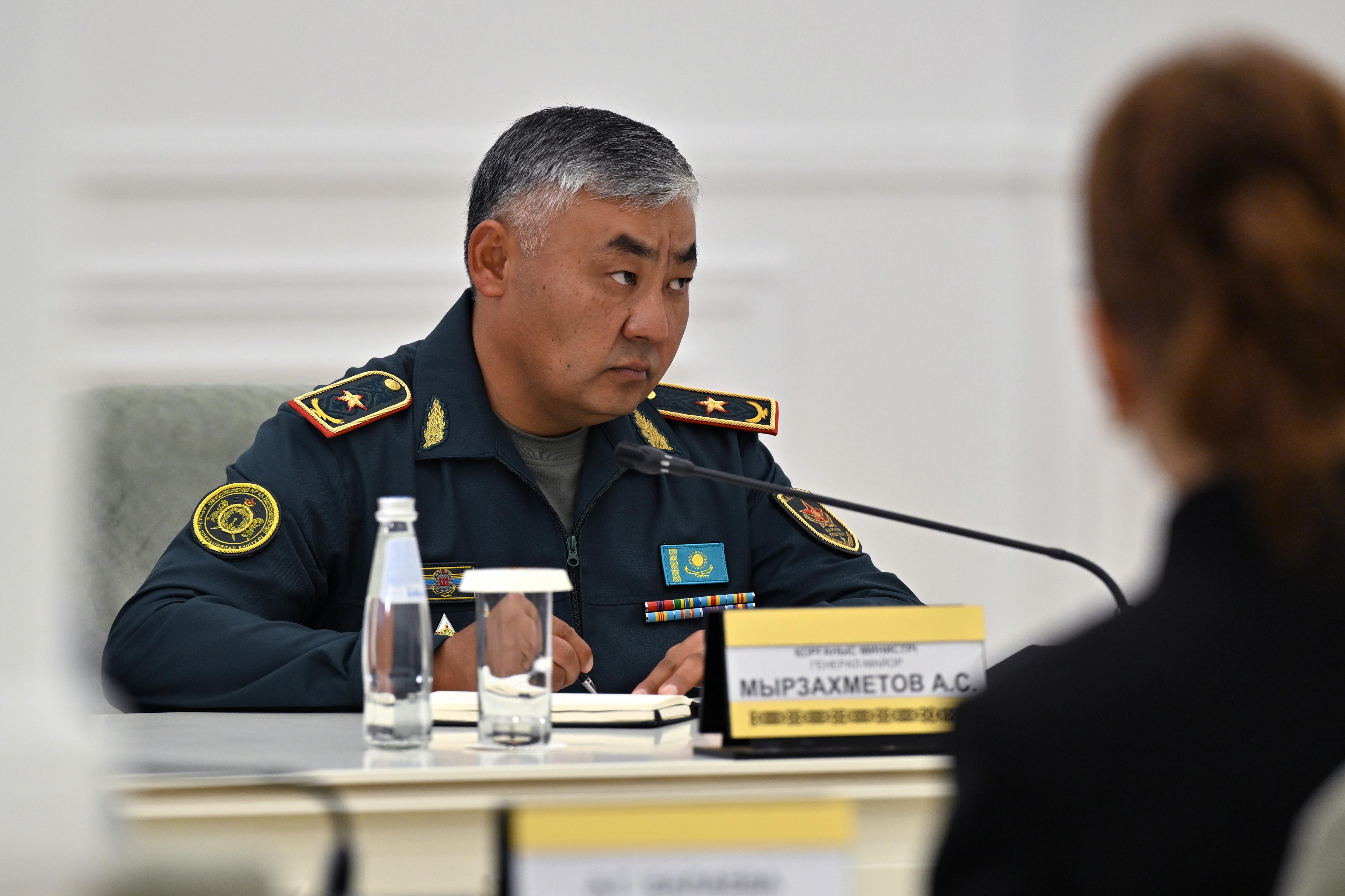
At the beginning of the meeting, the participants observed a moment of silence in memory of the 14 servicemen who died during exercises in the Mangystau Region. The President announced that he had sent telegrams of condolence to the parents of all the deceased and assured that the relatives would be provided with all necessary assistance, emphasizing that not a single family would be left without support.
The Head of State gave a principled and harsh assessment of the tragedy that occurred. He qualified the death of servicemen in peacetime as the result of what is essentially criminal unprofessionalism on the part of officers, including the high command. Kassym-Jomart Tokayev demanded establishing not only the factual circumstances of the incident, but also the motives that guided those who developed the concept of the exercises, as well as assessing whether the assigned tasks corresponded to current security threats.
The President stated that long-standing problems in the army have not been resolved by the leadership year after year, which undermines the country's defense capability, and that lessons from past tragedies have still not been learned. The Head of State demanded to find out who exactly developed and approved the concept of the exercises, what the role and coordination of the General Staff was, and why the Commander-in-Chief of the Naval Forces was absent from the event.
In his opinion, irresponsibility, negligence, and showmanship have become commonplace, systemic work is absent, and crisis response plans do not withstand criticism, which is a direct consequence of the indifference of the leadership of the military department.
The President especially noted that the participants in the exercises were not provided with the necessary equipment, including maritime life jackets. In this regard, he focused attention on the issues of personnel safety and demanded that the Government Commission give an objective assessment of the actions of all officials responsible for the preparation and conduct of the exercises, the organization of supplies, and control over compliance with safety measures.
In parallel, in accordance with a Presidential Order, a comprehensive audit of the activities of the Ministry of Defense has been launched. The audit will cover the organization of service, the state of supplies, and the material and financial provision of the army. The commission is headed by Deputy Chairman of the Security Council Aida Balayeva, who has been tasked with identifying all violations and determining the circle of persons subject to accountability. The Head of State emphasized that neither rank nor positions held can serve as grounds for avoiding responsibility, and he took this matter under personal control.
Summarizing, Kassym-Jomart Tokayev stated that the tragic incident has clearly exposed numerous shortcomings and a lack of professionalism in the army. He noted that the time has come for a cardinal military reform, calling it an urgent task. In this connection, the President announced the personnel changes that had been made and introduced the new Minister of Defense, Aidos Myrzakhmetov, noting that the new minister is taking office at a difficult time, that exceptional responsibility is being placed on him, and that he will have to solve extremely complex tasks, which will require the most decisive actions.
The Head of State reminded that at a recent meeting with the Apparatus of the Security Council, priorities for work in the military sphere had already been formulated, and stated that the army has in fact been frozen in the past century. In the President's view, it is necessary to completely rebuild the command system taking into account advanced international experience. He emphasized that a comprehensive approach and strategic vision are required, which only competent officers with broad horizons possess, and that the ultimate goal of the reform should be the formation of a new-model army.
Kassym-Jomart Tokayev instructed that the digital transformation of the army be ensured and that human labor be replaced by technology to the maximum extent where it is expedient and possible. At the same time, he noted that new approaches to the development of the army are required, and that template solutions, demonstrative maneuvers, and beautiful reports are needed by no one.
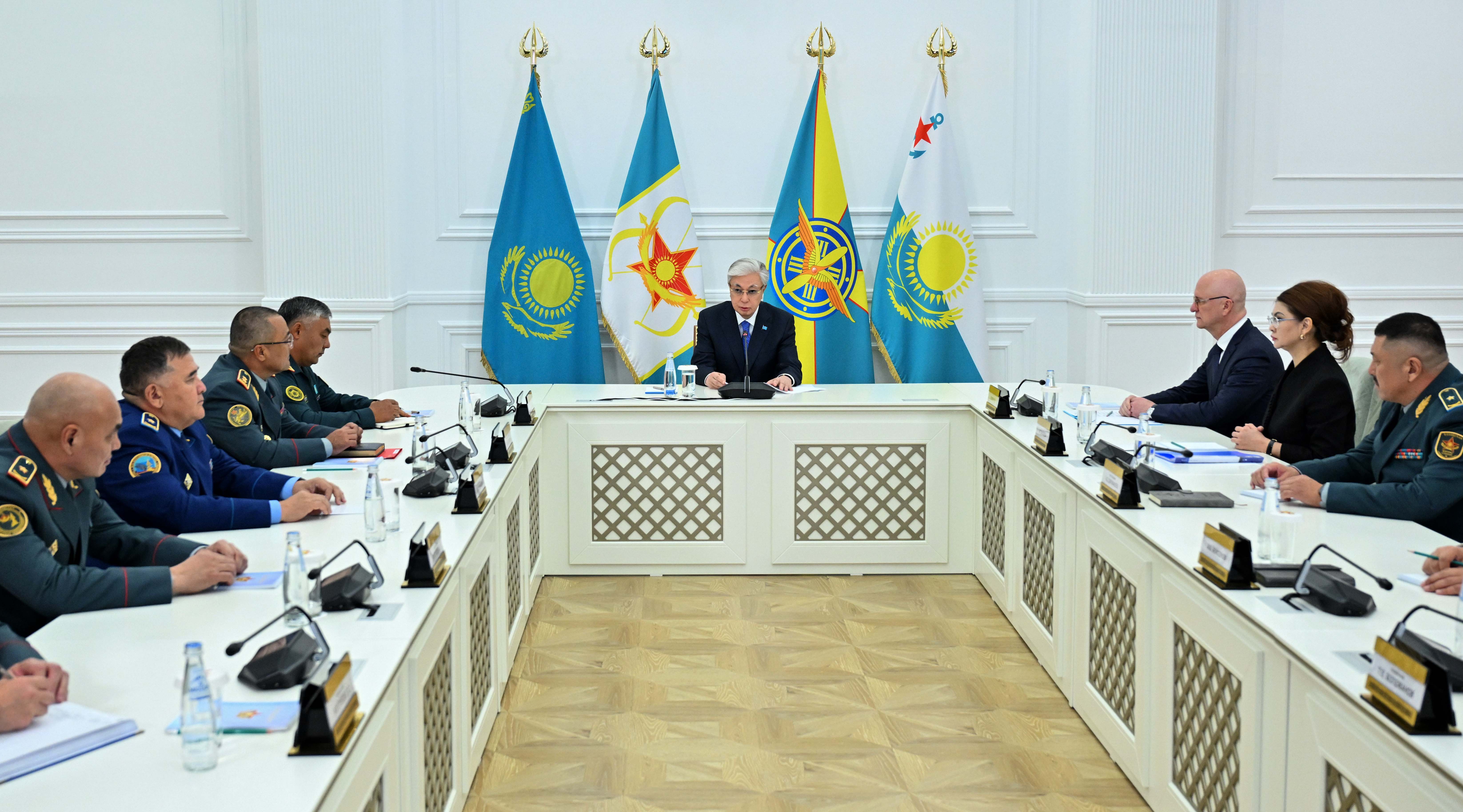
A number of priority tasks were set before the new Minister of Defense.
The first task is to radically improve the efficiency of budget spending. The President demanded that all allocated resources bring maximum results for strengthening the state's defense capability, and warned that misuse of funds and especially embezzlement are unacceptable, and that no one will escape responsibility for such actions.
The second task is to carry out reform of the Armed Forces taking into account modern threats. The Apparatus of the Security Council together with the Ministry of Defense has been instructed to submit a Military Reform Plan within ten days. The Head of State also considers it necessary to introduce transparent criteria for the evaluation and selection of personnel, emphasizing that promotion to command positions must be carried out exclusively on the basis of experience and professional competencies, and not on the principle of personal loyalty.
The third task is to strengthen ideological and educational work among servicemen, relying on the values of the Constitution, the history of military affairs, and the achievements of Kazakh and world culture. The President is convinced that the army must become a school of professional training, a source of deep knowledge and genuine patriotism, while the safety and life of every serviceman must become an unconditional priority. The Head of State reminded that the defense of the Motherland is the sacred duty of every citizen, and that those who have devoted their lives to military service are worthy of care and support. He expressed confidence that service in the army should not evoke fear and horror, and that the armed forces are called upon to be an institution that, using the best examples of the past and present, educates young warriors as true patriots of their Fatherland.
The President also pointed to the need for objective coverage of the service of servicemen, especially those who have achieved high results and received commendation from the command.
The Supreme Commander-in-Chief emphasized that the military department needs not voluminous concepts and formal roadmaps, but a clear, concrete, and phased Reform Plan. This document will be considered at a meeting of the Security Council in the second half of October. In conclusion, the President instructed the Apparatus of the Security Council to ensure coordination of all work on reforming the army.
Prepared by Viktor PANAYEV
Comments powered by CComment