

According to data from the World Justice Project for the past year 2025, Kazakhstan ranked 66th out of 143 countries worldwide in the Rule of Law Index, showing its best results in the ranking for ensuring citizens' constitutional and democratic rights.
Following the recent referendum on the adoption of the new Constitution, it became clear that the Republic of Kazakhstan does not intend to rest on its laurels, and even greater attention will be paid to reforms. At the same time, many members of the legal community believe that the effectiveness of legal norms and mechanisms is determined not only by the text of the Fundamental Law but also by the quality of their practical application, a point repeatedly emphasized by the Head of State, Kassym-Jomart Tokayev.
Key representatives of the professional legal community in Almaty shared insights with the editors of the "Yuridicheskaya Gazeta" (Legal Gazette) on how the legal market in Kazakhstan is changing, what threats and opportunities the digitalization of law brings, and why the quality of professional ethics remains the main factor of trust in the legal system. These representatives are Khasan Saduyev, Chairman of the Almaty City Chamber of Legal Consultants "Egida," and Alimzhan Aydarbekov, a Master of Law, AI specialist, and member of the same chamber.
– Khasan Khusainovich, my first question concerns your professional activities. As you are the Chairman of the Almaty City Chamber of Legal Consultants "Egida," please tell us what distinguishes it from other similar chambers?
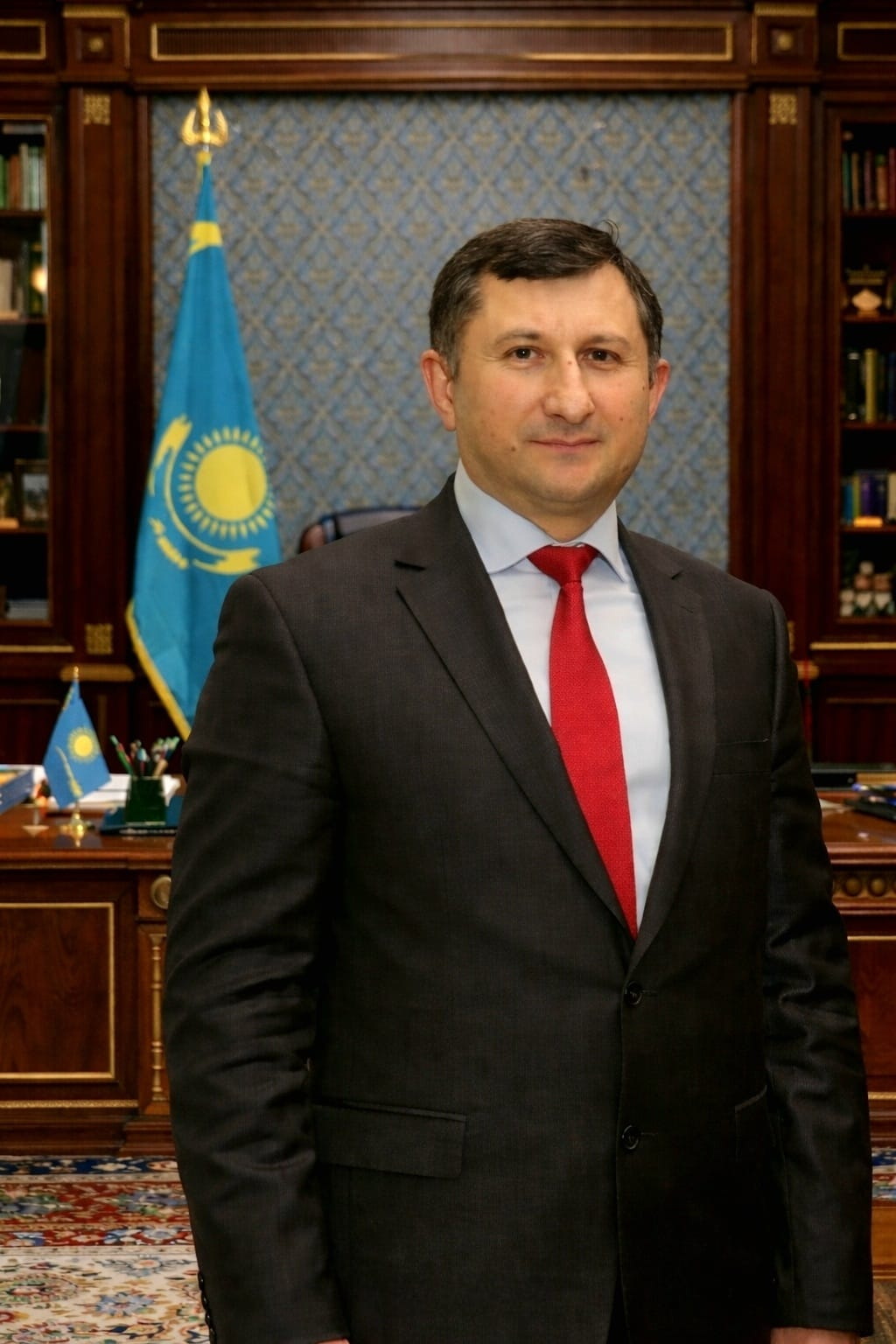 Khasan SADUYEV, Chairman of the Almaty City Chamber of Legal Consultants "Egida" – The Almaty City Chamber of Legal Consultants "Egida" was initially established as a professional association of lawyers in accordance with the self-regulatory organization (SRO) legal norms in effect at the time. It focused not only on formal compliance with legal requirements for participation in courts, as mandated by the Civil Procedure Code, but also on improving the quality of legal assistance and the professional level of legal consultants.
There are likely no significant differences. Practically all chambers in Almaty – there are 16 of them – have the same tools and founding documents. The only difference, perhaps, lies in the approaches to work. I believe the key distinction of our chamber and our legal consultants is that we strive to study the problem from the inside, and only based on the experience of our colleagues can we find solutions to essentially unsolvable problems and disputes.
Through the efforts of our chamber's members, we try to pay more attention to developing professional standards, improving the qualifications of consultants, and forming sustainable law enforcement practices based on the practical knowledge of our legal consultants, as well as judicial acts that have passed through all instances and have essentially become benchmarks for applying current legal norms. In other words, we try to compile our own body of practice.
Furthermore, chamber members actively participate in expert work, including discussing draft laws and legal initiatives, offering suggestions for improving legislation and law enforcement practices. This allows us not only to adapt to changes but also to influence, to a certain extent, the proper and progressive development of the legal environment.
– Some experts argue that adopting the new Constitution was a vital necessity that will protect us from further problems related to the political, economic, and legal turbulence currently shaking the world. Do you believe this was a timely decision?
– I believe so. After all, the Constitution is undoubtedly the foundation of any state's legal system, and its renewal is always a significant stage in the development of a country and its society. I think it's important to understand: the effectiveness of the Constitution is determined not only by its content but also by the quality of its implementation. The most crucial point here is the practical application of the Fundamental Law's norms. Participation in various international conferences, as well as reviewing the law enforcement practices of foreign countries, shows that the stability of a state's legal system is ensured by a combination of legally sound norms, effective institutions, and consistent law enforcement practices that must strengthen year by year.
Therefore, the discussion of the draft new Constitution was nationwide, taking into account the opinion of the expert majority, which included practicing lawyers, respected scholars, jurists, as well as representatives of state bodies from all branches of government and Majilis deputies. As is well known, public discussion is an important element in developing the legal culture of our people and the state as a whole.
– According to the World Justice Project data for the past year 2025, Kazakhstan ranked 66th out of 143 countries in the Rule of Law Index. At the same time, problems are noted with respect for fundamental citizens' rights, limitations on state powers, and the openness of some state institutions. In your opinion, what prevents our country from eradicating the gaps associated with ineffective legal institutions?
– Assessments by international organizations like the World Justice Project are important benchmarks, allowing us to see both achievements and directions for further development. Regarding existing challenges, they are largely linked to the need to further strengthen law enforcement practice, increase the transparency of certain institutions, and develop feedback mechanisms between the state and society – goals our President pursues through his addresses and adopted programs, such as the "Listening State," the ideology of "Law and Order," and others.
I believe Kazakhstan is taking consistent steps towards modernizing its legal system. We see and feel this, as administrative justice has become actively operational and, as we can see, is yielding good results in protecting our citizens in disputes with state bodies. I would also note the creation and successful operation of Cassation Courts for civil, criminal, and administrative cases, which has allowed the Supreme Court of the Republic of Kazakhstan to focus on reviewing the application of legal norms and issuing regulatory resolutions in line with current demands and societal changes.
At the current stage, I believe our key task is to ensure the stability and predictability of law enforcement, as this is precisely what builds trust in the legal system from both citizens and businesses.
– Alimzhan Kadyrzhanovich, as you are a specialist in the field of AI, I must ask about the rapid development of artificial intelligence. A Ministry of AI has already been created and is functioning. What are the prospects for AI development within Kazakhstan's legal field? In your opinion, how will the legal market change in the next five to ten years, and what place will AI technologies occupy in it?
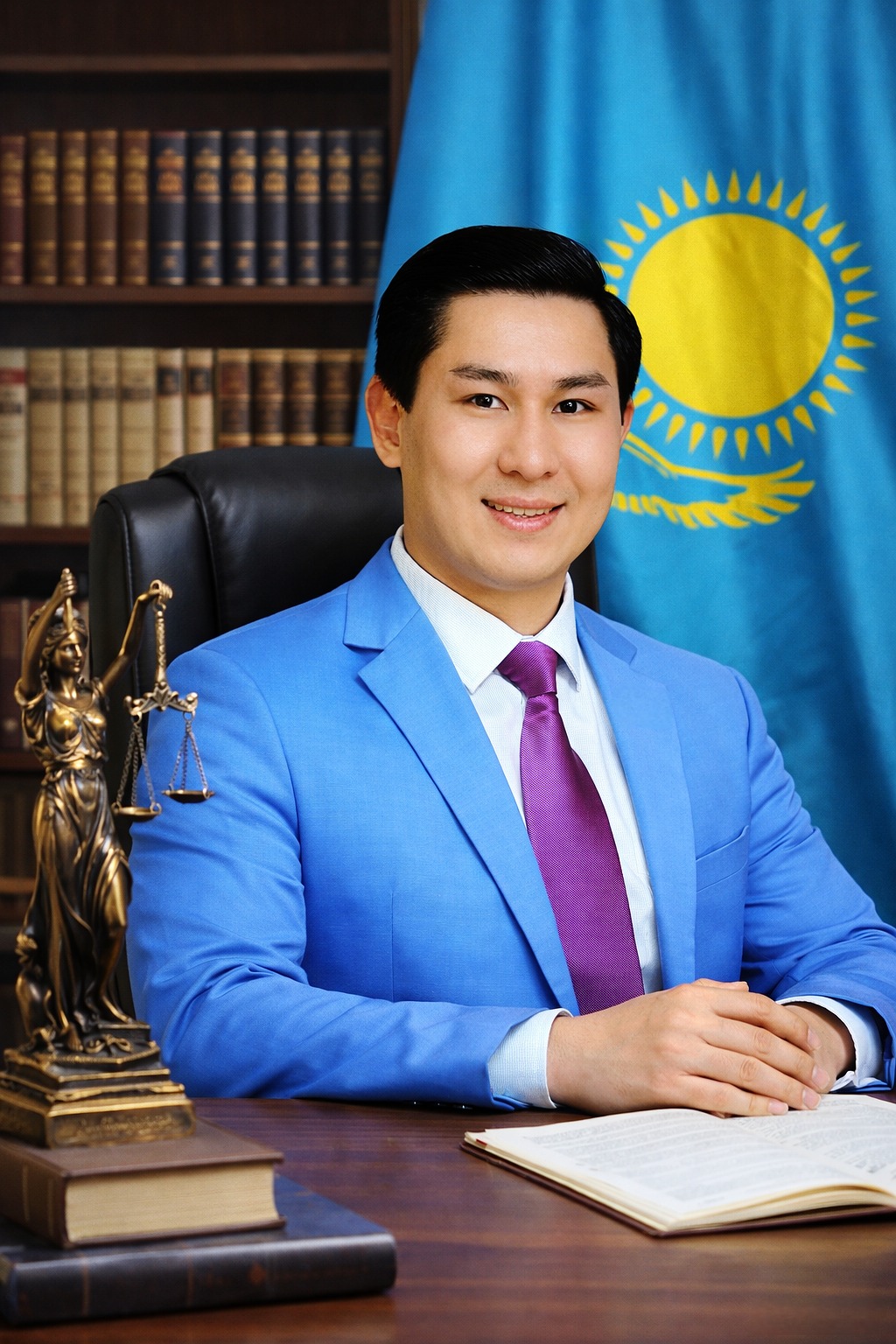 Alimzhan AYDARBEKOV, Master of Laws, AI Specialist, Member of the Almaty City Chamber of Legal Consultants "Egida"
– The rapid development of artificial intelligence currently is not just a technological trend in the dynamics of society as a whole, but a profound institutional transformation of human thinking and a new relationship with the subject, affecting the very nature of law and law enforcement worldwide. And to be frank, the creation of specialized government bodies, including the Ministry of AI, is just the first, organizational stage. It is necessary, and it marks the start in the Republic of Kazakhstan. It's not always visible to the public, but it is at this stage that the new rules of the AI game, the regulatory framework, and the strategic vision are formed. Looking more broadly and deeply, Kazakhstan has long been in the process of transitioning to a new model – digital justice. In recent years, very strong changes have occurred that seemed impossible just 10–15 years ago: over 93 percent of public services have been transferred to electronic format, millions of citizens use digital services daily, the judicial system is actively implementing electronic legal proceedings, and legal assistance is gradually moving beyond classic offices, becoming accessible online to all users. This indicates a key point: digitalization in law has already taken place here, and it is in the process of becoming established. Now, the next new stage begins – the intellectualization of this system through the introduction of artificial intelligence.
I believe that in the coming years, artificial intelligence will perform many key functions.
First, analytics and expertise. Even today, technologies allow processing vast amounts of judicial practice and identifying patterns and errors that a human is simply physically incapable of seeing. This creates prerequisites for so-called "predictive justice," where a lawyer knows in advance the likely outcome of a case.
Second, automation. Routine legal work – drafting standard contracts, claims, legal opinions – will gradually be transferred to intelligent systems. This does not diminish the role of the lawyer but frees them from mechanical burdens.
Third, increasing the accessibility of law. Online consultations, chatbots, LegalTech platforms are already making legal assistance cheaper and more accessible, especially for regions and socially vulnerable groups. But along with this, serious challenges arise: personal data protection, the risk of information leaks, the problem of algorithmic bias, and the lack of clear international standards for regulating AI in law. Without solving these issues, digitalization might not strengthen, but rather weaken, trust in the legal system.
– But we do have laws regulating the use of digital platforms, including AI, and administrative liability is provided for personal data leaks. Recently, the possibility of criminal punishment has also been raised, is that not so?
– Law, like any social system, cannot develop in isolation from technological progress. If we artificially slow down the introduction of new tools, it will not preserve stability – on the contrary, it will create a gap between the national legal system and global trends. Countries and legal systems that actively implement artificial intelligence are already forming more effective justice models, more accessible legal services, and more competitive markets. If we delay this process, relying on outdated approaches, we risk finding ourselves in a catch-up position.
I am fundamentally convinced that artificial intelligence will not replace lawyers, but it will change their role. Law is not only about norms; it is also about assessment, logic, ethics, and human understanding of a situation. No machine can fully replace these elements. However, AI is already becoming a powerful tool that enhances a specialist's capabilities. Simply put, before, a good lawyer worked faster than others. Now, a good lawyer is one who knows how to work with technology. Speaking systematically, Kazakhstan is moving in the right direction. We have a regulatory framework, state digitalization programs, and practical results – from e-government to digital courts. But the main question is not about technology but about the approach. Artificial intelligence should not replace legal work and human responsibility. It should enhance it. The future of the legal profession in Kazakhstan lies in the combination of three factors: deep knowledge, digital skills, and high professional ethics. It is this balance that will allow us not only to adapt to changes but also to use them for the benefit of society and the state.
– In recent years, there has been open confrontation within the legal community of Kazakhstan between the bar associations and the chambers of legal consultants. What contradictions currently exist between these bodies? Why can't they simply unite and work together without conflicts and mutual accusations?
– Confrontation between bar associations and chambers of legal consultants has always existed, not only in the Republic of Kazakhstan but worldwide. There are constantly questions regarding these points globally. This is not an accidental conflict nor a matter of personal ambition of individual representatives of the profession. Essentially, it reflects deeper processes occurring in Kazakhstan's legal system during its transformation. In simple terms, we are witnessing a clash between two models of the legal profession.
The first is the classical, bar model. It historically formed as an institution with special guarantees, strict admission requirements, and a high degree of responsibility. A lawyer (advocate) is, first and foremost, a participant in the administration of justice, possessing a special status and performing the publicly significant function of protecting rights and freedoms. The second model is that of legal consultants. A more flexible, market-oriented segment that emerged in response to the growing demand for legal services. There is less formalism, a lower entry threshold, and a wider range of services – from consultations to business support. And it is in this difference that the main source of contradiction lies.
Kazakhstan's legal community has become complex and multi-layered. Today's task is not to simplify it through artificial unification, but to learn to work effectively within this multi-layeredness. Only then will competition become not a source of conflict, but a driver of quality and development for the entire legal system.
It is important not to overlook one fundamental thing, often forgotten in the heat of professional disputes. Advocates, legal consultants, prosecutors, and judges – they all share the same foundational starting point: a legal education. They are all, first and foremost, lawyers. A person first undergoes basic training, obtains a bachelor's degree in law, and masters the same principles: understanding of the law, the logic of law enforcement, and the basics of legal culture. Only after that do they choose a professional path – becoming an advocate, consultant, judge, or entering civil service. That is, the differences between them are a matter of specialization, status, and function, not the essence of the profession. Therefore, when sharp contradictions arise within the legal community, it is important to remember: this is not about different professions, but about different roles within a single profession.
– My next question concerns the moral dimension of the legal community. How advantageous is it professionally to be a lawyer in Kazakhstan today, and what knowledge is important to have at one's disposal, given that our laws and subordinate legal acts are quite often subject to changes, amendments, and repeals, which is also not reassuring.
– The question of how "advantageous" it is to be a lawyer in Kazakhstan today is actually much deeper than it might seem at first glance. It is important to distinguish between two aspects here: the material component of the profession and its substantive, professional value.
To be frank, the legal profession remains in demand. Moreover, the demand for quality legal services is growing. This is due to the increasing complexity of the economy, the strengthening of state regulation, the digitalization of processes, and the increase in the number of legal disputes. The more complex society becomes, the more it needs lawyers.
But simultaneously, another process is occurring – the market is ceasing to "forgive" weak training. Today, simply having a diploma is no longer enough. It is advantageous not just to be any lawyer, but a strong specialist capable of solving real problems.
As for profitability, it is becoming increasingly differentiated. High-level lawyers – especially in the fields of corporate law, taxation, international transactions, and compliance – can indeed build successful and stable careers. At the same time, specialists without practical skills often face low pay and high competition.
I would like to separately draw attention to another important but often underestimated problem. Today in Kazakhstan, we are gradually losing an entire generation of strong lawyers – scholars, practitioners, teachers – who for decades shaped the legal school, accumulated unique experience, and passed it on to subsequent generations. Due to age, many are leaving active professional life, and with them departs not just knowledge, but a living legal culture, strategic thinking, and an understanding of deep-seated legal processes. The problem is compounded by the fact that we do not always manage to utilize this resource. In daily busyness, in the race for practice and results, young specialists often lack time for systematic learning, dialogue with mentors, and reflection on the experience of the older generation. Sometimes this is perceived as a secondary task that can be postponed – but strategically, this is a serious mistake. Because knowledge can be obtained from books and databases. But professional thinking, legal intuition, and understanding the nuances of law enforcement – all this is transmitted only through personal communication, through school, through continuity. If this gap is not bridged, we risk facing a situation where the number of formal specialists increases, but their depth and quality decline. And this is already a matter not only of the profession but also of the stability of the entire legal system.
Therefore, it is extremely important today to establish systematic work to preserve and transfer knowledge: develop mentoring, involve experienced specialists in educational processes, and create platforms for professional dialogue.
– There are frequent cases of lawyers improperly fulfilling their duties to clients. Why has this problem become acute, and how can it be solved?
– Unfortunately, there are currently instances where individual lawyers abuse the law and their professional capabilities. This refers to situations where case handling is done formally, without due depth and responsibility, and the main goal becomes not achieving a legal outcome and protecting the client's interests, but solely receiving remuneration.
This practice manifests itself in various ways: dragging out processes without objective necessity, a formal approach to document preparation, the lack of a real case strategy, creating inflated or knowingly unrealistic expectations for the client. This is not just an ethical issue – it is a matter of trust in the profession as a whole.
A lawyer is not an intermediary for "paperwork." They are a specialist whose decisions affect property interests, business reputation, and sometimes people's destinies. When work is done negligently, not only the specific client suffers – the perception of the entire legal system suffers.
Regarding the constant changes in legislation. Yes, this is an objective reality. Laws and by-laws in Kazakhstan are indeed regularly updated, adjusted, and sometimes radically revised. On the one hand, this creates a feeling of instability. But on the other hand, it is a sign of a living legal system adapting to new economic and technological conditions.
The problem here is not so much the changes themselves, but the lawyer's ability to work with them.
A modern lawyer must not just know the norms – they must be able to navigate a changing environment. Being a lawyer in Kazakhstan today is both an opportunity and a challenge simultaneously. An opportunity – because the market is growing, becoming more complex, and needs qualified personnel. A challenge – because the requirements for specialists are becoming significantly higher. And if previously one could work relying on stable knowledge, today success is built on continuous development, mental flexibility, and the ability to adapt to changes. The lawyer of the future is not just a bearer of the law. They are a specialist who can navigate the complex system of law and IT technologies, make decisions under conditions of uncertainty, and take responsibility for them. And it is precisely such specialists who will build trust in the legal system and determine its development in the coming years.
Interviewed by Bakhtiyar TOKHTAKHUNOV
Comments powered by CComment