

The Constitution is the supreme law of any state, defining the foundations of its political, legal, and social system. In the Republic of Kazakhstan, the Constitution plays a key role in ensuring stability, the rule of law, and the protection of citizens' rights.
The Constitution of the Republic of Kazakhstan was adopted on August 30, 1995, by a national referendum. This day is annually celebrated as a state holiday – Constitution Day. The Fundamental Law enshrines the country's sovereignty, form of government, structure of state power, and the fundamental rights and freedoms of individuals and citizens.
According to the Constitution, Kazakhstan is a democratic, secular, legal, and social state. The highest value is recognized as the person, their life, rights, and freedoms. This means that the state is obliged to protect the interests of every citizen and create conditions for a dignified life.
The Constitution establishes the principle of the separation of powers into legislative, executive, and judicial branches. Legislative power is exercised by the Parliament, executive power by the Government, and judicial power by the courts. This mechanism ensures a balance of power and prevents abuse.
Special attention is paid in the Constitution to the rights and duties of citizens. Everyone has the right to education, work, freedom of speech, and is also obliged to comply with laws and respect the rights of others. The Constitution also guarantees equality for all before the law, regardless of nationality, religion, or social status.
Thus, the Constitution of the Republic of Kazakhstan is the foundation of the state system, ensuring stability, justice, and the development of society. Its observance is the duty of every citizen and the key to the country's prosperity.
On March 15, 2026, a referendum was held in Kazakhstan, at which a new Constitution was adopted (entering into force on July 1, 2026). According to the amendments, the president will acquire new powers: he will be granted the right to unilaterally appoint the Prosecutor General, the Chairpersons of the Constitutional Court and the Supreme Court, the National Bank, and the Chairman of the National Security Committee. The President will also appoint the Vice President, though in agreement with the Parliament.
In the autumn of 2026, instead of a bicameral Parliament, a unicameral one will be convened in Kazakhstan – it will be called the Kurultai.
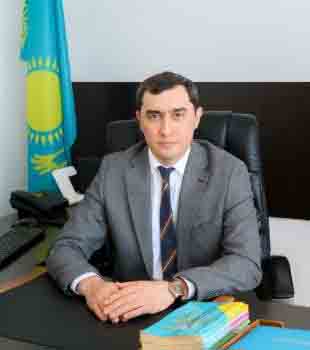
Ilyas KAKIM,
Chairman of the Specialized Investigative Court
of the city of Kokshetau, Akmola Region
Comments powered by CComment