

The constitutional reform of 2026, approved in a national referendum on March 15, represents a large-scale transformation of the political system, in which changes in the judicial branch of government occupy a special place. We discuss what these changes are and what work is being done to clarify the new provisions of the Fundamental Law in the courts of Almaty with A.G. Zharylkasyn, Deputy Head of the Judicial Administration Department for Almaty, Ethics Officer.
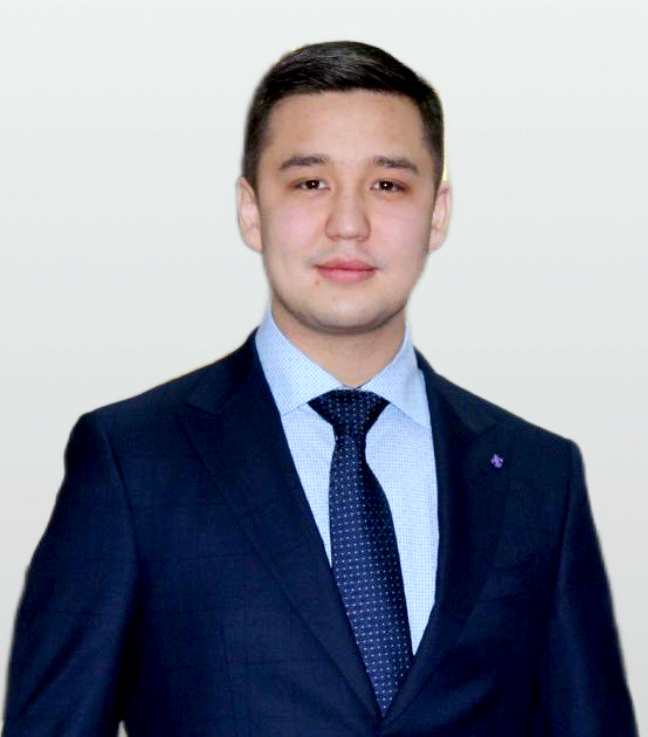
– Abay Galymzhanuly, after the adoption of the new Constitution, work has begun in the courts of Almaty, as in all of society, to comprehend the reform and understand the necessity of adopting certain norms. What is the main thing in this work?
– The main thing is that while the previous stages of constitutional reform in 2017 and 2022 laid the conceptual foundations for the independence of the courts, in the new Constitution of 2026, these principles have been translated into the realm of specific institutional mechanisms.
An analysis of the novelties shows that our state is not only proclaiming the independence of judges but also creating a system of real checks and balances. Thanks to all these and other adjustments made to the Fundamental Law, according to expert assessments, more than 80 percent of its content has been renewed, affecting 77 articles. And our task is to convey to civil servants of the judicial system and to citizens the essence of the fundamental changes, including those in the relationships between branches of government, which allows for the creation of a legal basis for the genuine independence of judges.
– How can full coverage of these changes be ensured in information and explanatory work?
– The scale of the changes made requires not only their formal study but also deep understanding, because the Constitution defines the foundations of the state structure, the system of government bodies, and guarantees of citizens' rights and freedoms. Therefore, it is important that the new provisions are correctly understood by both civil servants and society as a whole.
In this regard, systematic information and explanatory work is being carried out in the judicial system, aimed at forming a uniform understanding of constitutional novelties, their goals, and practical significance. Special attention is paid to issues related to the further development of the principles of the rule of law, judicial independence, and ensuring effective protection of citizens' rights.
A structured form of presenting the novelties allows for comparison and evaluation in semantic, value-based, and strategic dimensions, and for understanding their purpose and expected results. This contributes to the formation of a deeper and more stable understanding of the content of constitutional provisions, which increases the effectiveness of work towards achieving a uniform and correct explanation of the material under discussion.
The main tasks at this stage are to develop common approaches to organizing explanatory work, ensuring accessible and high-quality communication of constitutional novelties to various target audiences, and facilitating the practical understanding and application of constitutional norms.
To answer the question: isn't it enough to simply read the text carefully? I will respond that the Constitution, like any other legal text and especially the Fundamental Law, has its own complexities and terminology. And citizens and employees of state bodies do not always understand how to apply the new norms in practice.
Therefore, when organizing explanatory work, it is recommended, taking into account the characteristics of the target audience, to use official sources and legally correct formulations; present information in simple and clear language; and avoid different interpretations of constitutional norms.
– What is the novelty of the provisions concerning the judicial system?
– The constitutional reform of 2026 has radically revised the principles of forming the judiciary and its accountability. Thus, on the one hand, the Kurultai, as a unicameral Parliament, receives the right to elect Supreme Court judges upon the nomination of the Head of State. The formation of the highest judicial authority becomes a public political procedure instead of an internal corporate decision. On the other hand, at the mid and lower levels, there is a consistent limitation of administrative resources, with personnel issues – promotion, disciplinary action – being transferred to the Supreme Judicial Council.
A significant place in the reform is given to the development of administrative justice. The new Constitution directly enshrines the provision that judicial power is exercised, inter alia, through administrative proceedings. Granting constitutional and legal status to administrative courts completes the long-term process of institutionalizing administrative justice. It was initiated in 2021 and now is finally separated into an independent form of justice, equal in status to criminal and civil proceedings.
Particular attention deserves the changes concerning the formation and activities of higher state institutions, including the judicial system and prosecutorial bodies. The introduced constitutional amendments are aimed at further strengthening the principles of legality, institutional stability, and effectiveness of public administration.
These and other innovations are aimed at forming a new independent model of justice. Of course, the strength of the new system will be tested in practice, including law enforcement. But the direction of movement is set correctly – towards institutional and procedural independence of justice. And these turning points in Kazakhstan's political evolution, as well as the changes and additions made to the Fundamental Law, provide the main thing: new legal guarantees for the protection of the rights and interests of our citizens.
In this regard, we view the explanation of the new provisions of the Constitution as an algorithm of actions to create common standards of interpretation for a unified understanding of the norms and the scale of the institutional changes themselves, and to clarify their meaning and goals.
Interviewed by Asem SAKENOVA
Comments powered by CComment