

Almaty hosted an international scientific-practical conference titled "Artificial Intelligence and Law in the Era of Digital and Social Challenges" at Caspian University. The conference was dedicated to pressing issues surrounding the application of artificial intelligence technologies in legal practice, as well as the protection of individual rights in the context of the digital transformation of society.

The event was organized by the "Әділет" Higher School of Law, the Almaty City Chamber of Legal Consultants "Egida," the Eurasian Center for Cooperation and Partnership in Analytical and Legal Literacy, and the Consulting Legal Agency "Sofia." The conference received support from its information partners – Postfactum.kz, "Yuridicheskaya Gazeta," "Zań gazeti," and the "Paragraph" information system.
The conference served as a platform for open professional dialogue among lawyers, advocates, judges, civil servants, scholars, and specialists in the field of digital technologies. Particular attention was paid to the practical aspects of using artificial intelligence, digital threats, personal data protection, and the search for effective legal regulatory mechanisms for new social relations.
Opening the session, the Dean of the "Әdi let" Higher School of Law, Doctor of Law, Professor Svetlana Moroz, emphasized the particular relevance of the topic under discussion.
"As we know, 2026 is the Year of Digitalization and Artificial Intelligence. Therefore, today's event makes a very significant contribution to the realization of the goals and objectives set by the Head of State for the professional community. I would like to note that within our school, a large five-credit course – 'Legal Regulation of Artificial Intelligence' – has been developed. Starting September 1, 2026, it will be taught within our university in three languages – state (Kazakh), Russian, and English. I wish all participants fruitful work and new scientific achievements," emphasized Svetlana Moroz.
A guest from Uzbekistan – Doctor of Law, Professor, Head of the Department of Criminal Procedure Law at Tashkent State University of Law, Dildora Bazarova – detailed in her speech the issues surrounding the use of digital evidence in criminal and civil proceedings.
"As a scholar specializing in criminal professional law and criminology, I feel acutely how quickly digital technologies are changing the traditional understanding of evidence, investigation, judicial evaluation of facts, and the personal responsibility of lawyers. Electronic correspondence, digital traces, data from information systems, audio-video recordings, results of big data analysis – all of this influences how the evidentiary base is formed and how the court evaluates evidence and case circumstances.
In these conditions, artificial intelligence opens up significant opportunities. It can assist in analyzing judicial practice, identifying patterns in case file systematization, searching for contradictions, and processing large volumes of information.
However, along with opportunities come certain questions. The cost of error here is particularly high, because it concerns human rights and freedoms, trust in justice, and the balance between the interests of the state, society, and the individual. Therefore, AI in law should not be perceived as a replacement for a judge, investigator, prosecutor, advocate, or expert. In our opinion, artificial intelligence should be a tool, but not a subject making legal decisions," noted Dildora Bazarova.
Issues regarding the legal status of artificial intelligence in civil law relations were addressed by Candidate of Law, Associate Professor of the Russian-Tajik (Slavonic) University, Zainura Ismoilova.
According to the expert, Kazakhstan's experience is of great interest to neighboring states, as many countries in the region are only beginning to develop legislation in the field of artificial intelligence.
"Kazakhstan is one of the leading countries, very actively implementing digital technologies and state electronic platforms. At the same time, it is important to continue studying, researching, and identifying various practical and theoretical problems associated with the use of AI, as this can play a significant role not only for Kazakhstan but also for Central Asian countries, and CIS countries in general, which are interested in studying the experience of implementing an AI law. Many Central Asian countries do not yet have such a law, but we are working in this direction," noted Zainura Ismoilova.
The need for a balanced approach to AI implementation was stated by the Chairman of the Legal Consultants Chamber "Center for Legal Protection," Director of the KBTU Legal Department, and Senior Lecturer at the "Әділет" Higher School of Law, Olzhas Alimov. It was emphasized that digital transformation opens up new opportunities for increasing the efficiency of legal activities. However, with the development of digitalization and AI, existing gaps and shortcomings cannot be ignored; the legal community must address them through joint efforts, dialogue, and reflection. All of this should serve the benefit of the Kazakh people and play a positive role in the legal education of every citizen.
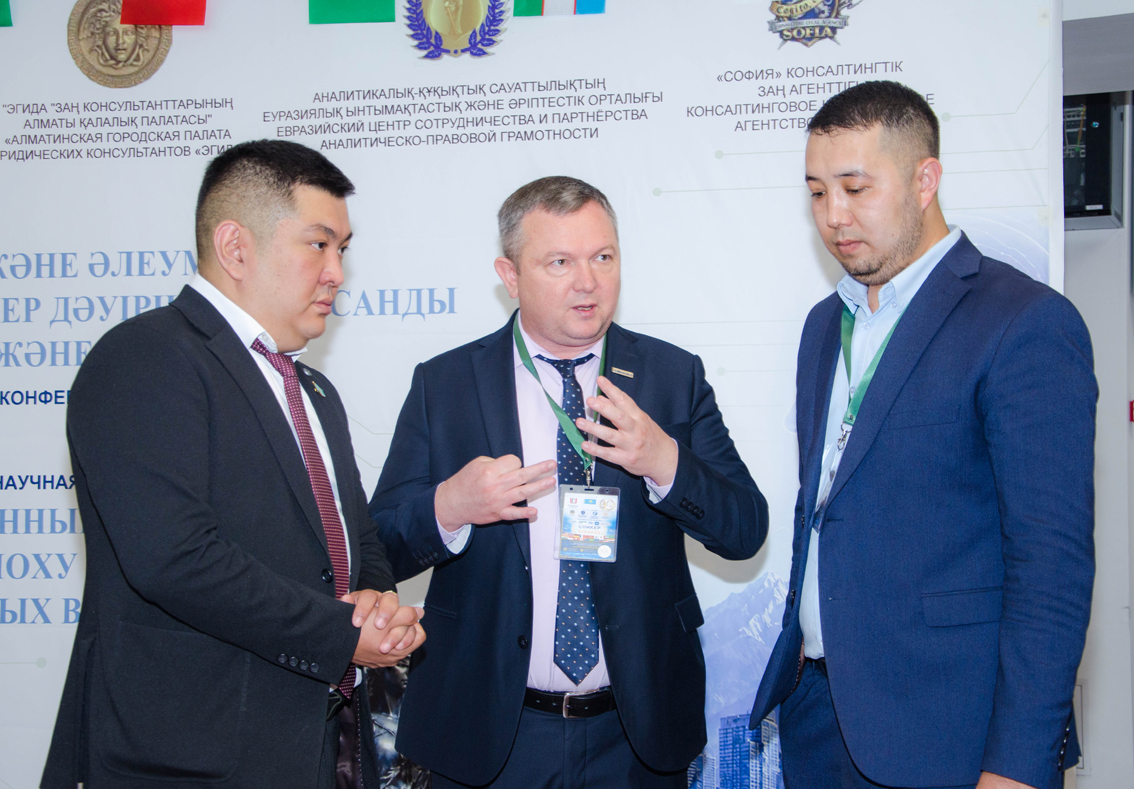
Professor of the "Chinese Studies" educational program at the Kyrgyz-Chinese Research Institute of the Kyrgyz National University named after Zhusup Balasagyn, Doctor of Law, Aliya Kalybaeva, shared Kyrgyzstan's experience in the field of digital legislation.
"In Kyrgyzstan, the topic of AI is relevant and has also touched upon the sphere of justice. The economy has long been living in this mode, which has a significant impact on the daily lives of citizens. Alongside new opportunities, new legal questions arise that require scientific understanding and the search for effective legal regulatory mechanisms, including those concerning human rights in the digital environment and personal data protection. This requires the development of different approaches to regulating new digital relations.
Practice shows that many of these issues have no universal solutions and require constant dialogue between the state, the scientific community, and legal practice. A digital code has been adopted in Kyrgyzstan, but today it has certain, so to speak, inaccuracies that require careful refinement, specifically by representatives of civil law science," shared Aliya Kalybaeva.
During the second session of the conference, leading representatives of Kazakhstan's legal community spoke.
The Chairman of the Almaty City Chamber of Legal Consultants "Egida," Khasan Saduyev, noted that the development of artificial intelligence has become both a serious challenge for the legal profession and a new tool for improving work efficiency.
"Artificial intelligence is one of the key technologies of the 21st century and is already having a direct impact on public administration, the economy, education, business, and the legal sphere. If several years ago AI was perceived as an element of the distant future, then in 2026 it has become a full-fledged working tool, used daily in decision-making, information processing, and the provision of professional services – something we encounter every day.
Today, AI development is one of the priorities of the state policy of the Republic of Kazakhstan.
Artificial intelligence can analyze large volumes of legislation, identify contradictions in documents, conduct preliminary legal reviews of contracts, generate drafts of statements of claim, responses, complaints, and legal opinions. Moreover, modern systems can search for relevant judicial practice and assist in assessing potential legal risks.Elements of AI are also undergoing practical testing in the activities of the judicial system. The digitalization of legal proceedings, the development of electronic services, the automation of certain processes for case review and judicial practice analysis show that technologies are gradually becoming part of law enforcement activities," noted K. Saduyev.
Alongside this, it is necessary to clearly understand: AI does not replace either a lawyer or a judge. It can significantly speed up information processing, help find solutions and identify patterns, but it is not capable of fully considering all circumstances of a specific case, evaluating evidence from the perspective of inner conviction, applying principles of justice, reasonableness, and good faith, nor bearing legal responsibility for the decision made. Therefore, according to the speaker, as technology develops, the importance of professional legal analysis increases.

The Managing Partner of the international law firm ALC Attorneys, General Secretary of the Legal Consultants Chamber "Justus," Farid Aliyev, emphasized that Kazakhstan holds a leading position in Central Asia in the development of digital technologies. At the same time, he drew attention to the risks associated with the use of neural networks.
"Today, Kazakhstan is a kind of flagship among Central Asian countries in the field of information technology development. AI analyzes information and provides analysis based on the data we input. Questions of legal business strategy, argumentation, participation in negotiations, forming basic questions related to legal positions – these, of course, remain with the human.
Undoubtedly, we should not remain conservatives; AI certainly carries certain risks. The main one is that neural networks make mistakes, generate non-existent norms and laws, and invent court decisions that never happened. A lawyer who uses AI without critical evaluation, without checking the source, risks, firstly, their reputation, secondly, the client's interests, and, naturally, a negative case outcome.
Therefore, I believe that the key competence for a lawyer is still the ability to verify the information provided by AI and bear certain professional responsibility for how AI is used in practice," shared F. Aliev.
Lawyer of the Almaty City Chamber of Legal Consultants "Egida," Natalia Vishneva, focused on the protection of human rights in the digital space. The modern lawyer becomes a link between the state, business, and technology developers, ensuring the observance of citizens' rights and legitimate interests in the digital environment. With the adoption of the digital code, for the first time, digital human rights have been established at the state level. This represents the formation of a new legal philosophy for the digital state. Here, the lawyer's work increases more than ever, because they will have to protect the observance of rights, freedoms, laws, and human interests in the digital environment, which is quite challenging.
General Director of "YurInfo" Company LLP (Zakon.kz), Mikhail Kolomin, noted the importance of further improving legislation in the field of artificial intelligence. He emphasized that Kazakhstan became the first CIS country to adopt a special law on AI, laying the foundation for risk-oriented regulation of digital technologies.
"For our part, as one of the leading online publications in our republic, we oversee the direction of conveying information to the public regarding artificial intelligence, personal data protection, and combating internet fraud. I am in favor of certifying the use of AI in practice. We support its development, but using maximum diplomacy, we still try to create conditions and guide the attention of our legislators towards regulating and certifying it," said M. Kolomin.
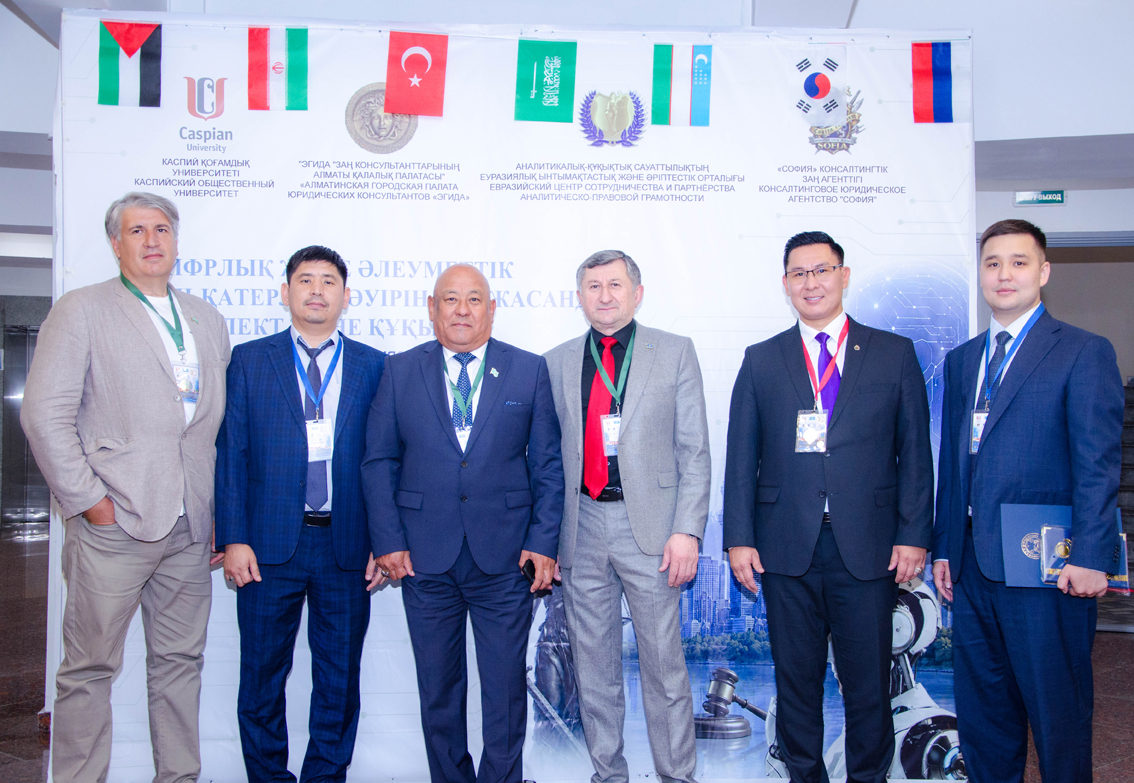
A separate block of the conference was dedicated to issues of digitalization in the judicial system.
Judge of the Almaty City Court, Candidate of Law, Svetlana Yakovleva, presented a report titled "Artificial Intelligence in Courts."
"The foundation of digital justice in Kazakhstan is a huge array of electronic data accumulated over 16 years. As a result of processing over 100 million electronic documents, we managed to convert over 15 million final decisions, containing 50 million metadata, into a structured, machine-readable format. This allowed us not only to implement statistical modules but also to introduce digital assistants for judges using elements of artificial intelligence, machine learning, test mining technologies, and robotization.
The constituent elements of electronic justice are:
- electronic document management, including the electronic submission and processing of documents received by the court in electronic form;
- placement of information about the court case in open access on the Internet;
- data search by case participants through the judicial cabinet;
- the ability for users, without leaving home or the office, to send over 100 types of electronic appeals to the court from any gadget via a mobile application.
AI is a judge's assistant in routine work: collecting information, processing it for analysis, drafting typical simple legal documents, etc., but nothing more. AI analyzes a set of documents, pulls judicial practice for the case, provides a regulatory framework with updates, suggests a measure of punishment, develops templates for judicial acts, but the final decision rests with the judge. AI can become a useful tool, but only under the condition of critical verification of its conclusions and adherence to professional ethics. Technologies are a tool. The judge has been and remains a human," emphasized S. Yakovleva.
Judge of the Medeu District Court of Almaty, Dinara Kuikabayeva, shared her views on AI development in the judicial system, presenting a report on: "Digital Evidence in Civil Procedure: Problems of Admissibility and Court Evaluation."

"Digitalization has led to major changes, including in the evidence system. Previously, we only had written evidence, where everything was clear and simple. Now, many other types of evidence have emerged that we couldn't even imagine before – correspondence in messengers, email, social media posts, geolocation data, surveillance camera recordings, data from information systems and internet resources. This is increasingly becoming the subject of evidence in court hearings. Naturally, some disagreements arise in practice regarding the interpretation and admissibility of this evidence. The very concept of 'digital evidence' as such does not exist. We are trying to formulate it, but the concept of digital evidence is not specified in any law or code. However, many problems remain; in court hearings, we establish these facts to the best of our ability and send certain requests. There is a large field for legislative regulation in this area," noted D. Kuikabayeva.
Deputy Head of the Judicial Administration Department for Almaty, Ethics Officer Abai Zharylkasyn, noted that at the VIII and IX Congresses of Judges of the Republic of Kazakhstan, the Head of State instructed to consider the possibilities of expanding the use of AI to form predictable judicial practice and optimize the work of judges.
"Today, as part of the President's instruction, digitalization is being actively applied in legal proceedings by the Supreme Court and the Judicial Administration.
Currently, we are presenting the 'Digital Judge's Assistant' project – another step towards forming predictable and uniform judicial practice. The project's goal is to demonstrate statistical results of similar cases to the parties. Currently, AI is used by conciliator judges as an auxiliary tool to demonstrate and explain to case participants the outcomes of similar cases.
The system determines case categories, processes judicial acts, identifies contradictions in decisions, and predicts the possible outcome of the dispute.
The main goals and innovations of the project are increasing the effectiveness of conciliation procedures, ensuring equal opportunities for parties in pre-trial settlement, and expanding the use of digitalization in judicial practice.
AI analyzes and produces results based on all judicial acts placed in the 'Törelik' information system, which amounts to over four million cases from 2021 to 2024.
The conciliator judge uploads the incoming claim as text into the 'Intelligent Search' module.
Then, the program analyzes the content in two seconds and provides the 100 most relevant judicial acts for the situation and the probability of the dispute's outcome.
With the introduction of this module, there has been an observed increase in conciliation procedures and the speed at which parties make such decisions.
Its application will soon allow parties to approach more substantiated and informed decisions about filing claims, resolving disputes with minimal costs, and reducing the burden on courts.
I am confident that the further development of such digital services will contribute to increasing trust in the judicial system, ensuring access to justice, and more effectively protecting the rights of citizens and businesses," summarized Abai Zharylkasyn.
Their reports at the conference were presented by judges of the Medeu District Court of Almaty, Zhanar Ualikhanova and Ainura Kumarova; Professor of Al-Farabi KazNU, Alua Ibraeva; OSCE Media Freedom Advisor, Gulmira Sultanbayeva; lawyer of the "Jan-Saya" crisis center, Gulshara Saparova; lecturer at Al-Farabi KazNU, Zhazira Saparbekova; expert-mediator, Salamat Zhubandyquly; and Master of Law, Zhuldyz Ibragimova.

The event concluded with a panel discussion, during which participants discussed practical aspects of using artificial intelligence in legal activities, prospects for digitalizing the judicial system, and issues of information security and personal data protection.
Participants agreed that artificial intelligence is already becoming an important tool in the legal sphere, but its application must be accompanied by improvements in legislation, adherence to professional ethics, and the preservation of the leading role of humans in making legally significant decisions.
Ravil KASYMOV
Photo: Galiya KALIEVA
Comments powered by CComment