

The last shift of paramedic Uldana Myrzuan ended in tragedy, the circumstances of which are now being examined by the court. The 23‑year‑old emergency medical technician sustained severe injuries while providing aid to victims and died in hospital ten days later. In the dock is the chairperson of the condominium owners' association (OSI) of the building where the collapse occurred.
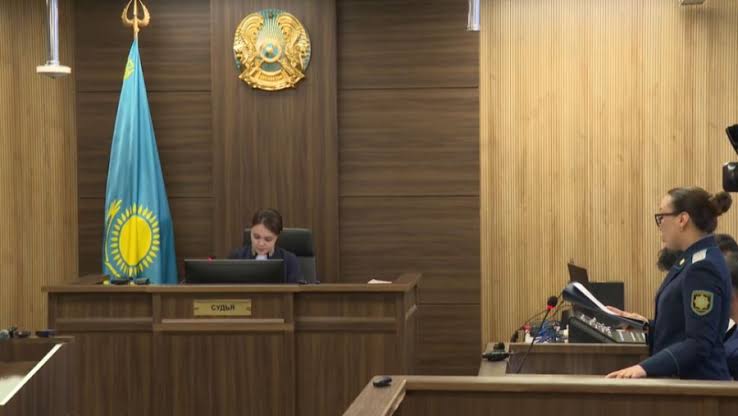
In Astana, the trial continues in the criminal case against Saule Zhubaniyazova, chairperson of the OSI, who is charged under Part 1 of Article 254 of the Criminal Code with negligent performance of duties resulting in a person's death. The case is linked to the death of 23‑year‑old emergency paramedic Uldana Myrzuan.
According to the prosecution, the facade deteriorated gradually – cracks appeared and widened in the brickwork, while the cladding lost its bond with the load‑bearing wall. The investigation maintains that the chairperson of the OSI failed to ensure proper monitoring of the facade's condition and its inspection.
In court, the deceased's husband, Adilet Zeinel, testified that on the morning of 8 November they had travelled together from Kosshy to work. At around 7:45 a.m., they were each at their respective workplaces. Uldana had gone on her day shift as an emergency paramedic, while Adilet was on duty at the First City Hospital.
According to the victim's husband, at approximately 10:50 a.m. he was informed via the internal hospital phone that his wife was in the emergency admission department. At first, he did not believe what he heard, as he had been exchanging messages with Uldana shortly before.
"What I thought was that it was a joke, because she had texted me earlier. I didn't respond and went on with my work. When my mother called me a few minutes later, I realised that my wife really was lying in the emergency room at that time," Adilet Zeinel testified.
He then went down from the operating block and identified his wife. According to him, Uldana was unconscious and had sustained multiple injuries.
The deceased's mother, Salima Omarova, told the court about her last conversation with her daughter on the morning of 8 November.
According to the woman, at around 9:00 a.m. Uldana called her via video link while on her way to an emergency call. The mother asked her daughter not to hang up.
"I asked my daughter not to disconnect while she was travelling to the call. Every mother worries. I always told her: 'People are waiting for your help – help them as much as you can.' She only managed to say that she had arrived at the scene," Salima Omarova testified.
Shortly after that, the woman was informed of what had happened. She flew to Astana and went to the hospital. The mother of the deceased told the court that she saw her daughter in intensive care after surgery.
Following her testimony, the court session was adjourned due to the woman's deteriorating health.
Meanwhile, the proceedings have sparked debate among chairpersons of condominium owners' associations in Astana. Dozens of OSI leaders came to support Saule Zhubaniyazova. They argue that OSI chairpersons are held responsible for the maintenance of common property, yet their authority over owners and construction defects is limited.
The participants in the action believe that it is necessary to clearly delineate the responsibilities of OSIs, developers, and property owners who install structures on facades independently.
"We are burdened with enormous responsibility, but we have no leverage. If a resident illegally installs an air conditioner on the building facade and ignores the chairperson's warnings, the OSI will still be held accountable. But we cannot fine them – we can only hand them a notice, which they will simply throw away," the protesters stated.
According to Shingil Yeleusinov, head of the law firm Eleusinov&Partners, the position of OSI chairperson in itself does not imply automatic liability for any incident in the building. For a criminal law assessment, it is necessary to establish the specific duties of the person, the existence of information about the hazard, and the causal link between the inaction and the resulting consequences.
In his view, OSI chairpersons should document identified defects, inspection results, communications to owners and government bodies, as well as decisions made at residents' meetings. Such records make it possible to determine exactly when the problem arose, who was aware of it, and what measures were taken.
It should be recalled that the tragedy occurred on 8 November 2025, at a multi‑storey residential building on Tauelsizdik Avenue in Astana. Brick cladding collapsed from the building's facade, injuring five people. An emergency ambulance crew arrived at the scene. While they were providing assistance, cladding elements and an air‑conditioner mounting bracket fell onto paramedic Uldana Myrzuan. The young woman sustained severe injuries and died in hospital on 18 November, after ten days in intensive care.
Uldana Myrzuan was posthumously awarded the Medal "Yerligi Ushin" (For Courage) for the bravery and selflessness she displayed in the line of duty.
Amir KAIRGELDY
Comments powered by CComment